A dead delivery van EV in central Orange County needs a charge at the curb. A tow only pulls it off the warehouse run. Packages still have windows. The van still has a shift to finish. A flatbed doesn’t fix either one.
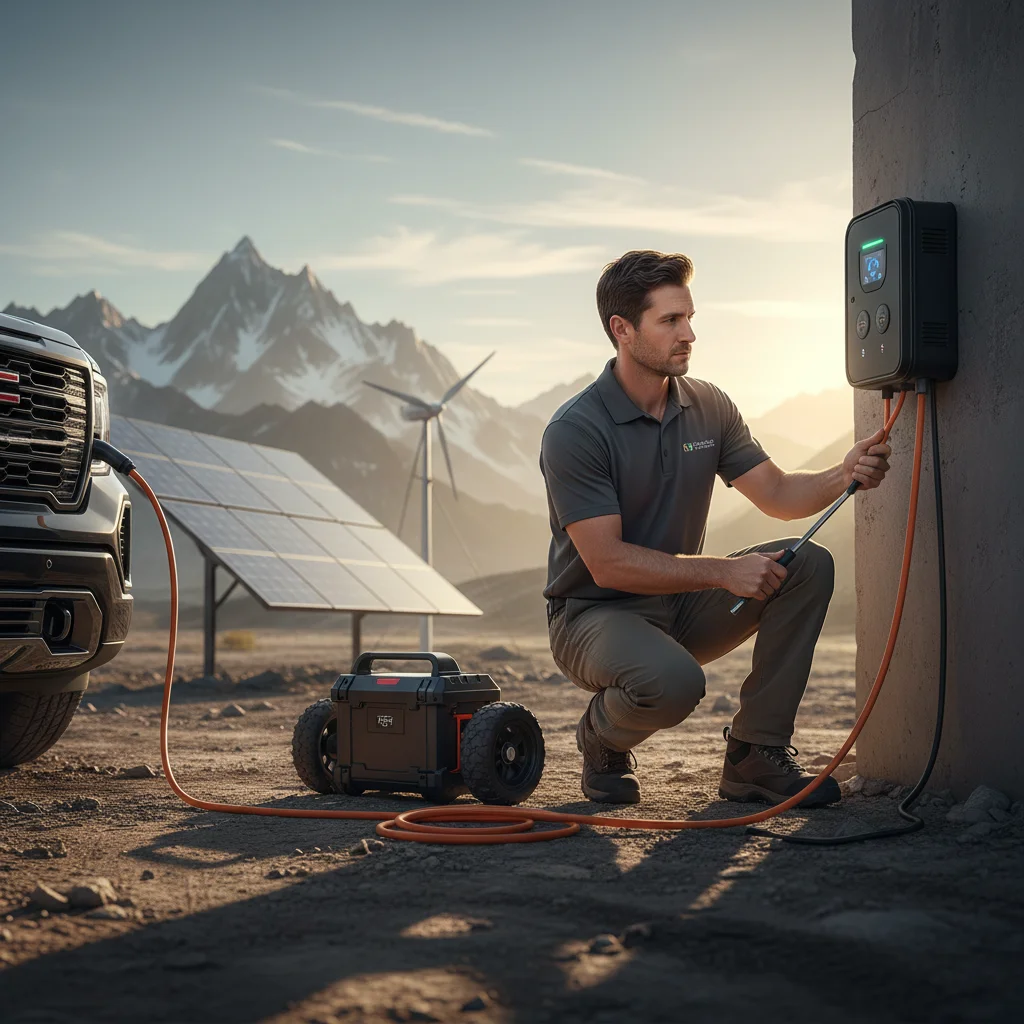
Why central OC warehouse runs drain a van EV
Orange County had 210,842 battery-electric vehicles as of December 31, 2025. That’s the California Energy Commission’s light-duty count. ZEVs are 10.56% of the county’s light-duty fleet. California’s share is 7.54%. Last-mile vans sit inside that mix. They work harder than a commuter sedan.
A warehouse run in Santa Ana, Tustin, or Garden Grove is stop-and-go. Cargo weight adds load all day. Cabin cooling or heat stays on between drops. The pack that looked fine at the depot can read empty two hours later.
The county has 7,095 public charging ports. That’s 36.8 ZEVs per public port. The statewide figure is 24.4. Drivers still have stalls they can name. Those stalls aren’t sitting in the loading bay. The van died between the depot and the next stop.
Tesla Superchargers around these warehouse cities are mapped and open. Tustin has a Supercharger at 14661 Franklin Ave. Others sit at 14521 Red Hill Ave, 15160 Kensington Park Dr, and 1705 Flight Way. Santa Ana has 28 stalls at 1008 17th St. It also has 20 stalls at 300 E 5th St. Garden Grove has 32 stalls at 12891 Harbor Blvd. Anaheim’s Electrify America at 440 N Euclid St lists 10 DC fast ports. Those are places a van can limp to after a boost. They don’t help until the van can move.
Pack empty, or the 12V quit
Most route deaths are one of two problems. The high-voltage pack hit zero. Or the 12-volt battery gave out. That small battery runs computers, telematics, and lift-gate controls.
A pack at zero usually follows a long, dense day. The dash still wakes. Range reads empty. The van won’t roll. That’s a range top-off, not a shop visit.
A dead 12V looks worse. No dash. No fob. No lift gate. The traction pack can still hold charge. The computers just won’t wake to use it. Tesla’s owner’s manual notes a related limit. Once range is gone, the low-voltage battery can lose support. It then needs outside power before the pack will take a charge. Plenty of other EVs fail the same way.
Neither failure needs a warehouse hoist. Both can be handled in the street. The cargo can stay strapped in.
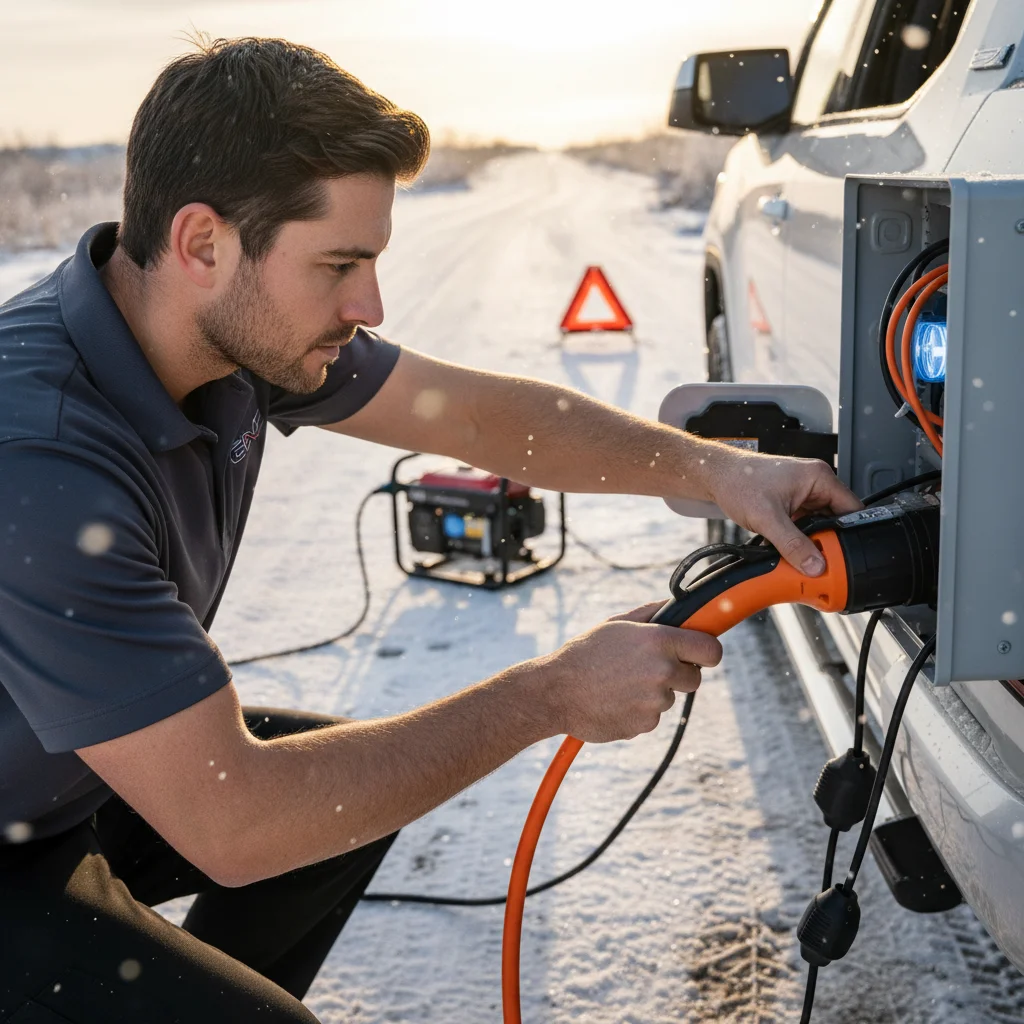
Why a tow is the wrong first call
A loaded delivery van is a poor flatbed candidate. You have to secure cargo. You have to find a bed that fits. You still have to charge it after the drop. Meanwhile the route clock keeps running.
Tesla’s own roadside policy answers a depleted pack with transportation. It doesn’t send a charge to the bumper. Running out of charge isn’t a warrantable breakdown. Covered transport of up to 500 miles is for a warrantable breakdown. That breakdown has to leave the vehicle undrivable. An empty van still gets billed for the ride. Then it still needs a plug.
Mobile charging versus a tow is the better call for this job. The operator comes to the van. The driver stays with the packages. Nobody unloads a tote to get moving.
Charge Pro OC is a referral line. It doesn’t own trucks or run a yard. It matches the stranded driver with an independent local operator. That operator quotes before any cable goes on. They bill the driver directly.
What the operator actually does
The operator’s truck brings a 240V Level 2 source. Teslas take a native NACS plug. Other EVs use a CCS or J1772 adapter. Typical sessions add 10 to 20 miles of range. That takes 15 to 30 minutes of charging. That’s plug time, not a promise of when someone arrives.
Ten to 20 miles is often enough. It can reach a depot plug or a public stall you already know. If the 12V is the failure, the operator can jump or replace it on site. Tesla and every major EV brand are in that mix, including cargo vans.
For the hardware itself, see how a mobile rescue truck works. Service detail lives on the mobile EV charging page.
What to do when the van won’t move
Get the van legal and visible. Keep the hazards on. Stay with the cargo. Don’t leave a loaded van on the I-5 or SR-22 shoulder. Don’t hunt a stall on foot.
If nothing powers on, treat it as a 12V failure first. If it wakes but won’t drive, treat it as an empty pack. Tell the operator the make and the pin. Say whether you’re on a public street, a dock, or a lot.
A van can die near Tustin’s Flight Way stalls. It can also quit on a Santa Ana block off 17th St. It still needs range to roll. Help on those streets follows the same pattern as EV roadside assistance in Santa Ana. The Tustin charging page maps local stalls once you can roll. If the pack is simply empty, out-of-charge recovery is the service that fits.
The operator confirms next steps with you on the phone. Charge Pro OC doesn’t publish arrival windows.
A dead van doesn’t have to kill the rest of the route. Call (949) 444-0151. We’ll match you with a local operator. They can charge or jump the van where it sits.
Frequently asked questions
Do operators handle commercial delivery vans, or only cars?
They handle both. The 12V jump works the same on a cargo van. So does the Level 2 top-off. The driver stays with the vehicle.
Can the van stay loaded while it charges?
Yes, the van can stay loaded during a jump or a range boost. Packages stay in the bay. The route can resume once the van rolls.
How much range does a roadside charge usually add?
Most sessions add 10 to 20 miles. That’s enough to reach a depot charger. It also covers a public DC fast site you can already name. If the operator finds a fault that isn’t empty pack or 12V, they should say so. They’ll point you to the fleet shop instead.