The cheapest EV charging station near me is not simply the pin with the lowest displayed rate. When the battery is already low, it is the reachable stall where you can enter the property, use the connector, start a live session, and still have a backup. Check the network app and stall screen before you drive. This page does not publish rates because they can change and Charge Pro OC does not set them.
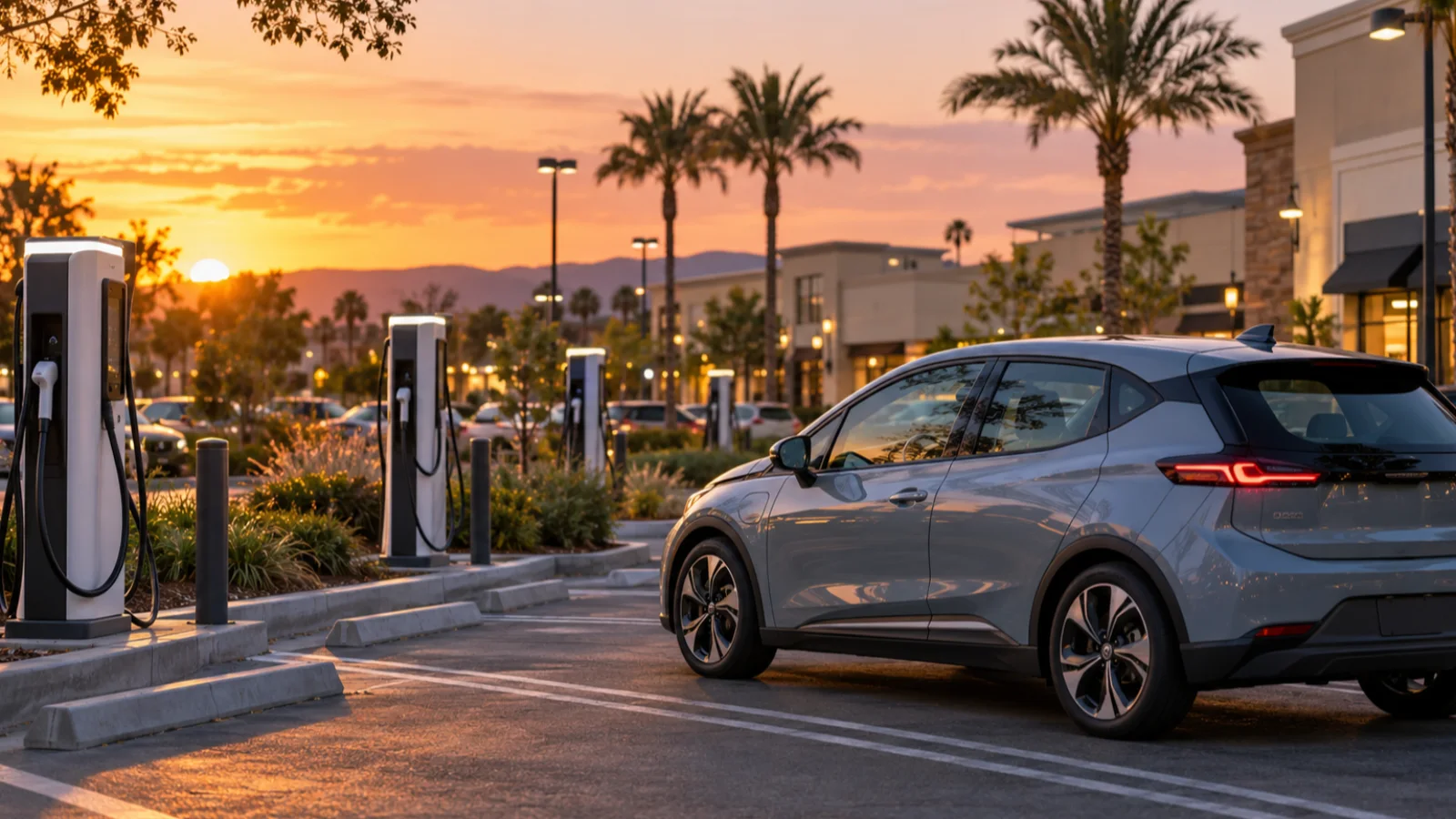
Cheap on the app is not the same as a stall you can reach
Price shopping makes sense while you have range. It changes when you are down to the last part of the pack in Anaheim, Irvine, Costa Mesa, Santa Ana, or South County. The lowest listed session can lose its value if the route is longer, the garage charges separately for parking, the property requires access, or the only compatible stall is occupied.
Start with the route, not the price badge. Ask:
- Can the car reach the site without relying on the optimistic edge of its range estimate?
- Is the charger inside a garage, workplace, dealership, apartment property, or permit-controlled lot?
- Does the stall use NACS, CCS, or J1772, and is the required adapter in the car?
- Does the network app show the unit as usable now?
- Is there another compatible site you can reach if the session fails?
Orange County had 7,095 public charging ports as of December 31, 2025. The California Energy Commission counted 5,600 public Level 2 ports, 1,475 public DC fast ports, and 20 public Level 1 ports. The same data counted 260,833 zero-emission vehicles in the county, or 36.8 ZEVs per public port. A large map does not make a particular low-price stall available when you arrive.
That is why this is not a list of the county’s lowest rates. A saved screenshot cannot confirm today’s session price, parking terms, or stall status. The live network app and the screen at the charger are the places to check.
Why hunting the lowest rate burns the last bar
The expensive part of a bargain hunt is often the second drive. You leave a working but less attractive option, reach the cheaper pin, and find a dark screen or a connector you cannot use. Now the original stall is farther away and the battery is lower.
Do the comparison while stationary. Put the reachable options on one short list. Remove any site whose access you cannot confirm. Remove any incompatible connector. Remove a site that leaves no fallback. Only then compare what the network shows for the session.
Level 2 and DC fast charging also solve different needs. Level 2 may fit a longer stop when the car can safely reach it. DC fast may fit a driver who needs usable range sooner. “Cheapest” without charging level, access, and time does not describe the same purchase.
The charging apps to open before you strand can help you compare the car’s map, PlugShare, and the network’s own app. Recent driver notes are useful for spotting a recurring problem. The network app and stall screen still govern the session in front of you.
Workplace, city, and network prices need a live check
A workplace pin may be available only to employees or registered visitors. A city charger may sit in a paid parking area. A shopping-center stall may involve parking terms separate from the charging session. A network may distinguish between guest and account use. None of those details can be assumed from a generic map icon.
No countywide workplace, city, or charging-network rate could be confirmed for this page, and publishing a copied number would turn it into a stale promise. Check all of the following before moving:
- The network app for the exact stall, not a nearby site with a similar name
- Any session terms displayed before you tap to start
- Parking signs, garage access, validation rules, and posted restrictions
- The stall screen after you arrive, before connecting or approving the session
If the app and screen do not make the cost clear, do not treat the pin as the cheapest option. Contact the network named on the charger or choose a different site whose terms you can confirm.
This is also different from searching for an unpaid session. Free EV charging in Orange County, then what covers complimentary pins, old listings, and access traps. Here, the question is whether saving on a paid session is worth using scarce driving range to reach it.
Use a simple low-battery decision
When the car is low, make the choice in this order:
First, confirm reachability. Use the car’s current range estimate and the actual route. Do not add an unverified safety margin or assume the car will cover a distance it does not display.
Second, confirm access and compatibility. A gated garage or wrong connector removes the site from the list even if the app shows an attractive price.
Third, confirm the session live. Read the exact site card. Check the charger screen when you arrive. Do not rely on a search-result snippet.
Fourth, preserve a fallback. Know where you will stop if that charger is occupied or offline. If reaching the first pin leaves no credible second move, the price comparison is over.
Fifth, stop driving when no verified option is reachable. A charge at the car or an out-of-charge referral may cost more than the number you hoped to find, but it avoids turning one uncertain detour into several.
When a curb charge beats another cheap stall
A mobile charge is not marketed here as the cheapest charging. Charge Pro OC does not publish operator rates, discounts, or price comparisons. It is the practical alternative when the vehicle cannot safely reach a confirmed public session.
Mobile EV charging describes the referral for bringing Level 2 power to the car. A typical rescue charge adds 10 to 20 miles of range in 15 to 30 minutes of charging. That is plug-in time, not an arrival estimate. The purpose is to reach a working charger, home, or another appropriate destination.
If the traction pack is already empty, use out-of-charge recovery. A jump to the low-voltage battery does not add miles to an empty traction pack. Tell the operator whether the screen still works, what range you last saw, and whether the car stopped after reaching zero.
Charge Pro OC is a referral service. It performs no charging or roadside work, owns no truck or equipment, employs no technicians, sets no price, and promises no ETA or service availability. An independent operator decides whether to accept the request, quotes you directly, and bills you directly.
Confirm the live price before you move
The useful answer to “cheapest EV charging station near me” is a verified, reachable session, not a rate copied into an article. Check the exact network app, property access, connector, parking terms, and stall screen. If any of those remain uncertain and the pack is too low for another attempt, stay with the vehicle.
Call (949) 444-0151 for a local operator referral. Charge Pro OC does not set the price or promise when an operator can arrive. If an independent operator is able to help, the operator will explain the proposed work and quote you directly.