Your charging session dies at 41% one visit and 69% the next. On Orange County public stalls, that scatter is usually the car. Pack temperature, or a limit you already set, cuts the session short. A tired pedestal can fail without picking a new percent each time.
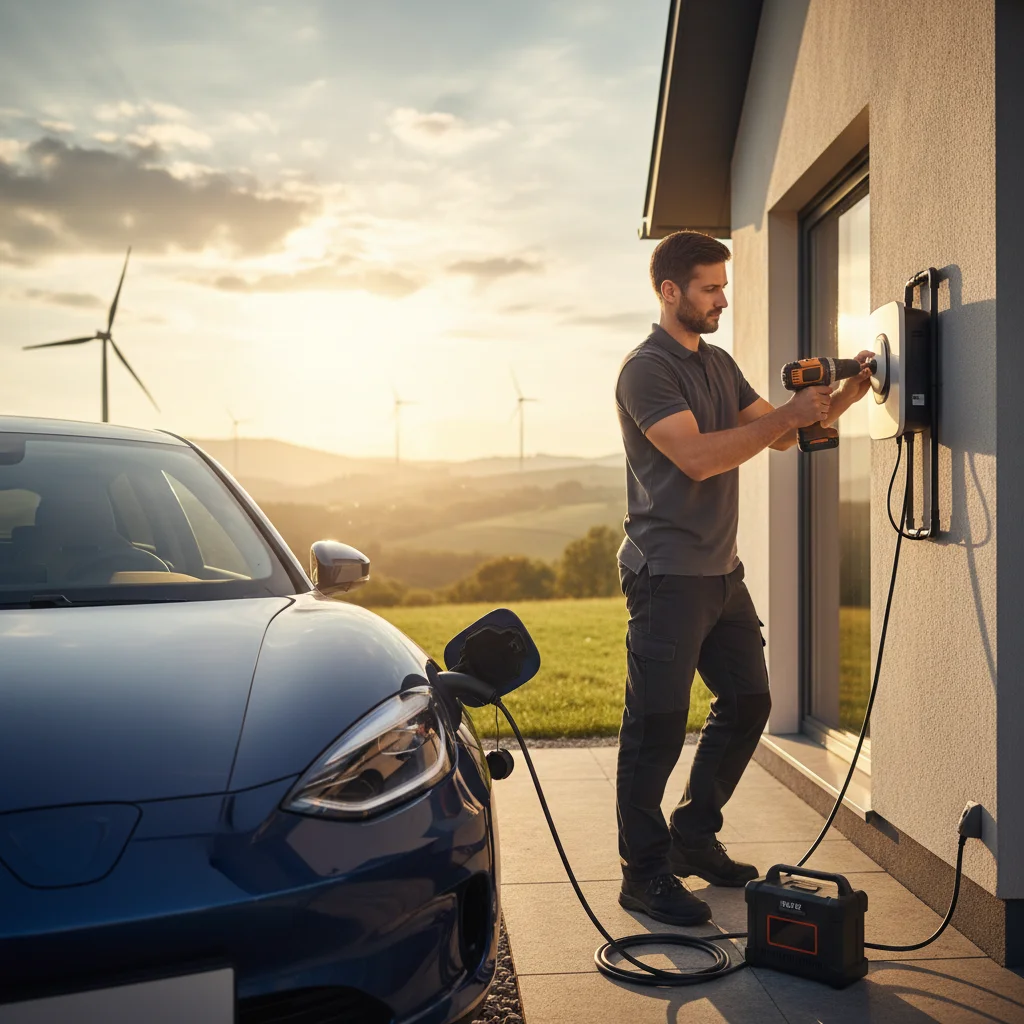
Two cutoffs that look the same in the lot
A stop at the same number, every session, isn’t random. You, or the car’s default, set a cap. A stop that jumps around has another driver. The battery management system is reacting to heat or voltage right then.
Orange County had 210,842 battery-electric cars as of December 31, 2025. That’s from the California Energy Commission’s vehicle population file. Those cars share 7,095 public ports in the CEC charger file. That’s 36.8 zero-emission vehicles per public port, against 24.4 statewide. The Supercharger at 1920 Main Street in Irvine has 40 stalls. Garden Grove’s Harbor Boulevard site has 32 stalls. San Clemente’s Avenida Vista Hermosa Supercharger has 49 stalls. Shared cabinets at those banks can slow a session. They still don’t pick a new cutoff percent each visit.
Tesla makes up 65.51% of the county’s battery-electric fleet in that CEC data. Tesla also holds 59% of Orange County’s public DC fast ports. That share is from AFDC station data accessed September 5, 2026. The stall still gets blamed when the car is quitting.
Check the cap before you blame the plug
Open the app or the center screen first. Most EVs let you set a daily charge limit. Owners often park that cap between 70% and 90%. A full charge is for a long trip. If every session dies at 80%, it isn’t a mystery. The car did what you told it to do. Random stops don’t repeat one number, landing at 43%, then 67%, then 55%. Clear the cap question, then look at heat.
The percent is a symptom of heat
Every EV’s battery management system guards the pack. It slows charging that’s too hot or too cold. The drive already warmed the cells, and charging adds more heat. When the pack crosses the system’s safe band, the car eases the rate. If temperature keeps climbing, the session can pause until the pack sheds heat.
You don’t get a dash line that names the thermal stop. You just see charging end, which is why it feels random. The threshold follows temperature, not a percent on the dash.
A car that just ran the 91 into Anaheim starts warm. A car that sat in a garage overnight starts cooler. Both can plug into a 325 kW stall on Lincoln Avenue. They can stop at different numbers, even though the BMS rule didn’t change.
Inland lots, coast lots, and canyon grades
Orange County isn’t one parking climate from coast to inland. Inland north county lots soak a parked pack on summer afternoons. That’s Brea, Fullerton, La Habra, and Yorba Linda. Theme-park and stadium lots in Anaheim do the same after a long day. Auto-row lots in Buena Park run hot too, so you plug in already warm.
Coastal north county lots are a milder soak. Huntington Beach, Seal Beach, Costa Mesa, and Newport Beach sit closer to the water. The same car can still overheat a session after a beach day. Electrify America has eight DC fast ports at Fashion Island. They’re still a hard, hot charge if the pack is already up.
Central county sites sit in dense lots and office parks. That’s Santa Ana, Garden Grove, Orange, and Tustin. Tustin’s Franklin Avenue Supercharger has 36 stalls in a busy office-park bank. East County canyon grades, including Santiago Canyon Road, load the pack through climbing. South county office parks sit right off the freeway. Irvine, Mission Viejo, and Laguna Hills all sit in that pattern.
Home Level 2 is gentler on pack heat. If random stops happen only on public DC fast, start with heat. If they also happen on a cool overnight home session, look past weather.
When the stall really is in the mix
A public DC fast cabinet can derate in its own heat. It can also share power with the stall beside you. ChargePoint has the most DC fast sites here, at about 1.1 ports per site. A bank of 20 stalls at Brea Mall can still drop power.
That’s a station issue, usually a slow rate or a failed handshake. It’s less likely to print a brand-new percent every visit.
If the connector is locked and energy isn’t flowing, start here. Use the checks in plugged in, connected, still not charging. If the stall never wakes, see a public EV charger that isn’t working. Try a neighboring stall on a different cabinet. Anaheim’s Supercharger cluster still fills on busy days. See what to do when Anaheim Tesla Superchargers are packed.
Read the pattern, then pick a check
| What you see | Likely cause | First check |
|---|---|---|
| Same percent, every session | Charge limit in the car | App or center-screen cap |
| Different percents, pack was warm | BMS pausing for heat | Rest 15 to 20 minutes after a drive |
| Only on hot afternoons | Lot heat plus driving heat | Shade, a garage, or a cooler hour |
| Only on DC fast, home Level 2 finishes | Station derate or shared cabinet | Another stall, or a slower session |
| Stops and will not restart | A real fault in car or charger | Treat it as a failure, not a pause |
What to do while you’re still at the stall
Check the charge limit first, and if it matches the stop, you’re done. If it doesn’t match, wait before you plug again. Fifteen to twenty minutes after a freeway run lets the pack shed heat. Shade helps more than people expect after an inland drive.
Don’t keep restarting a hot DC fast session as a test. Move to Level 2 if you can, or sit, then try once more. If it still dies in cool weather and shade, stop calling it thermal.
When the random stop isn’t heat
A weak 12-volt battery can drop the charging computer mid-session. The high-voltage pack may still have range left. Tesla’s Model Y owner’s manual notes the low-voltage battery loses support once range is exhausted. The car then needs external power before the high-voltage pack can charge. A 12-volt that’s merely weak can interrupt a session in a quieter way. When the 12-volt dies on the road walks through the signs.
A failing onboard charger is less common, and so is a true BMS fault. Those belong at a shop, not at a stall. Charge Pro OC doesn’t repair charging hardware at all. It’s a referral line that matches stranded drivers with independent local operators. It holds no license, owns no trucks, and doesn’t wrench on packs.
If the cutoff leaves you short
A paused session can leave less range than the next leg needs. Don’t sit in a restart loop until the car is stuck. The guide on running low before you strand covers how to spend what’s left.
If it won’t take a useful charge where it sits, use mobile EV charging. The pros we connect you with bring a 240V Level 2 source to the bumper. They use a native NACS plug, plus CCS or J1772 adapters for non-Tesla EVs. They typically add 10 to 20 miles in 15 to 30 minutes of charging. That’s charging time only, never an arrival time. The operator quotes you before starting and bills you directly.
Call Charge Pro OC at (949) 444-0151 for that match in Orange County.
Frequently asked questions
Why does EV charging stop at a random percentage?
The usual cause is the battery management system pausing because the pack got too warm. Driving heat, lot heat, and DC fast current all stack. The stop follows temperature, so the percent jumps around.
Does a heat-related stop damage the battery?
The pause is the protection, keeping the pack out of a hotter charge.
When is a random cutoff a real problem with the car?
If it happens on cool mornings in shade, heat is a weak explanation. A weak 12-volt or a charger fault is then more likely. A shop should see it, because a roadside charge only puts range back.