When a public EV charger is not working, treat the stall as the suspect. Your car is usually fine, so start with the kiosk. Orange County makes this failure feel common because it is. CEC counted 260,833 zero-emission vehicles here as of December 31, 2025. Public charging ports totaled 7,095 on that same file. That’s 36.8 ZEVs per public port. California’s statewide ratio sits at 24.4 ZEVs per port. More cars share each plug than the state average. A dark kiosk in a mall lot isn’t a freak event. Try the next stall, then aim at a named backup. If range is already thin, stop hunting and request a charge at the car.
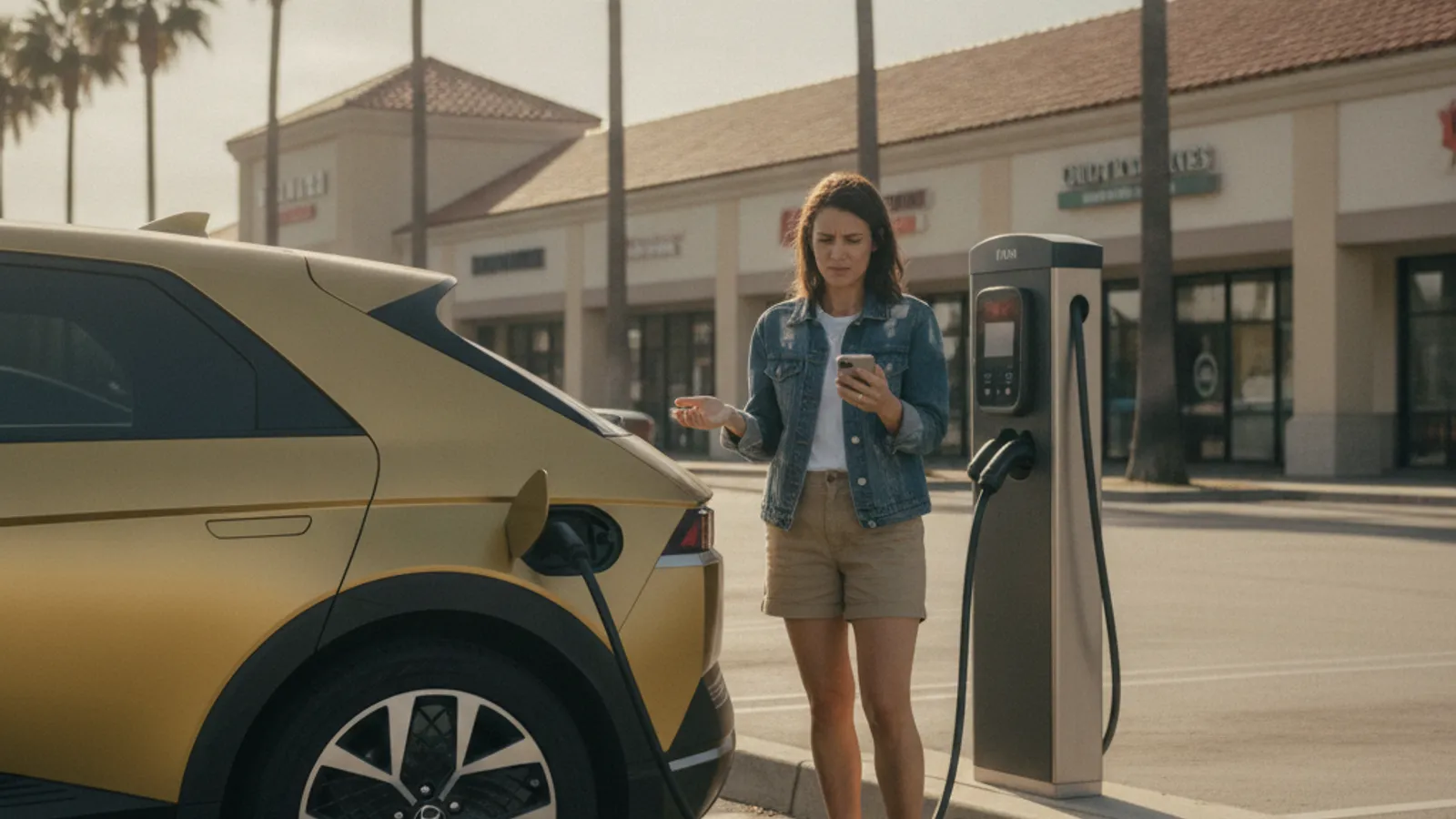
Why a dead stall is a normal Orange County problem
Orange County holds 12.02% of California’s battery-electric vehicles. It’s 8.33% of the state’s light-duty fleet. BEVs on the road here number 210,842. ZEVs are 10.56% of the county’s light-duty mix. The statewide ZEV share is 7.54%. New-sale share runs five to six points above California. In 2026 Q2, ZEVs were 24.77% of new light-duty sales here. Don’t read that as a boom that keeps climbing. California’s ZEV share of new sales peaked at 25.31% in 2024. 2026 Q1 was the weakest quarter in that CEC series. The commission changed its new-sale method in 2023 and again in 2025. Comparisons across those breaks aren’t clean, so treat yearly jumps with care. The port ratio is the clean number. That’s 260,833 ZEVs sharing 7,095 public ports. That’s 36.8 registered ZEVs for each public plug.
CEC’s charger file mixes voluntary surveys, grant lists, AFDC, PlugShare, and other online sources. It updates twice a year, so a stall can die between snapshots. Your car’s map can look healthier than the kiosk in front of you.
Tesla accounts for 138,121 of the county’s 210,842 BEVs. That’s 65.51% of the battery-electric fleet. Statewide Tesla’s BEV share is 61.34%. Tesla also holds 59% of Orange County’s public DC fast ports. Federal AFDC data shows 223 public DC fast stations inside the county. Those stations host 1,452 DC fast ports. Remove Tesla and you have 175 stations and 591 ports. ChargePoint has 71 stations and 76 DC fast ports. That’s roughly 1.1 ports per site. Electrify America has 30 stations and 138 DC fast ports. EVgo has 30 stations and 131 DC fast ports. When a ChargePoint post errors, there may be no twin stall beside it. Tesla rows in Anaheim, Irvine, Garden Grove, and San Clemente run as stall banks. One red screen isn’t the whole bank.
Tesla was 44.7% of new Orange County ZEV sales in 2025. More than half of those new ZEVs weren’t Teslas. They rely on CCS networks, adapters, and mixed lots. A dead Electrify America cabinet can be the whole plan for that errand.
What to do at the kiosk, in order
Stay in the space and don’t pull into traffic to think. Unplug all the way and check the connector. Look for debris, grit, or bent pins. Seat it again until the latch catches. A loose fit is still the most common false alarm.
Move one stall over if you can. DC fast sites often share a power cabinet. One pedestal can fail while the neighbor still runs. Garden Grove’s Supercharger at 12891 Harbor Boulevard has 32 stalls. Irvine’s site at 1920 Main Street has 40. San Clemente’s site at 101 W Avenida Vista Hermosa has 49. In those rows, the stall beside you is the first backup.
Restart from the network app, not the pedestal screen. Force-close the app, then open it and start from there. A dropped link to the billing server looks like dead hardware. It’s often just a stuck session, not a fried cabinet. Read the network’s own stall status before you keep tapping. If the app already flags the unit unavailable, stop arguing with the screen.
Change the payment path before you blame the hardware. A declined card can mimic a broken charger. Try the RFID card if you carry one. Try a second card in the app.
If none of that starts power, leave this stall. Don’t keep retrying the same error on the same pedestal. If the car takes a charge at home, the vehicle probably isn’t the fault. A car-side charging fault usually posts on your dash. For that plugged-in-but-idle loop, start with plugged in, connected, still not charging.
Pick a named backup before you burn range
Open a live app while you’re still parked. PlugShare and the network apps carry recent driver notes. In-car navigation can lag a failed stall. Use those charging apps to open before you’re too low.
North county has overlapping Tesla banks if one mall kiosk dies. Brea Mall lists 20 Supercharger stalls. Brea’s Madrona Avenue site lists 24. Buena Park lists 24 stalls at 6940 Beach Boulevard. It lists 28 more at 8888 Knott Avenue. Anaheim has seven Supercharger sites in the AFDC file. Those include 20-stall rows on East Lincoln and West Lincoln. You’ll find 16 on East Katella and 16 on North Euclid. Electrify America at Walmart 2242 lists 10 DC fast ports. That store sits at 440 N Euclid Street. That’s a different network if a Tesla row won’t start. If Tesla rows are the bottleneck, see Anaheim Tesla Superchargers when they’re packed.
Central county backups sit on Harbor, Valley View, and 17th Street. Garden Grove has 32 stalls at 12891 Harbor Boulevard. It has 16 at 12161 Valley View Street, listed at 500 kW. Santa Ana has 28 stalls at 1008 17th Street, listed at 325 kW. Tustin’s Franklin Avenue Supercharger has 36 stalls. Westminster Mall has 24 Supercharger stalls listed at 75 kW. Those stalls are slower than nearby 250 kW and 325 kW rows. They still count if the session actually starts.
Coast and south county mix Tesla rows with Electrify America and EVgo. Huntington Beach has 24 Supercharger stalls at 6913 Warner Avenue, listed at 325 kW. Newport Beach has 12 Supercharger stalls at 4241 MacArthur Boulevard. Electrify America at Fashion Island lists 8 DC fast ports. That site is at 401 Newport Center Drive. Use that when a Tesla stall nearby won’t handshake. More on that lot is in EV charging near Fashion Island. San Clemente has 49 stalls at 101 W Avenida Vista Hermosa. It has 16 at 990 Avenida Vista Hermosa. Electrify America’s Dana Point station lists 12 DC fast ports. The address is 25825 Las Vegas in Capistrano Beach. Mission Viejo has 24 stalls at 27741 Crown Valley Parkway. Lake Forest has 16 stalls at 24372 Rockfield Boulevard. That site lists Magic Dock, CCS1 plus NACS. If you’re not in a Tesla, confirm Magic Dock in the app first.
Inland south still has listed EVgo banks on the AFDC file. EVgo’s Plaza Antonio site lists 14 DC fast ports. It’s at 22351 Antonio Parkway in Rancho Santa Margarita. Westar Mercantile East in Ladera Ranch lists 8 DC fast ports at 27542 Antonio Parkway. EVgo in Seal Beach lists 4 DC fast ports at 801 Pacific Coast Highway. Confirm the stall is live before you leave the lot you’re in. A listed address isn’t a promise the cabinet is up tonight.
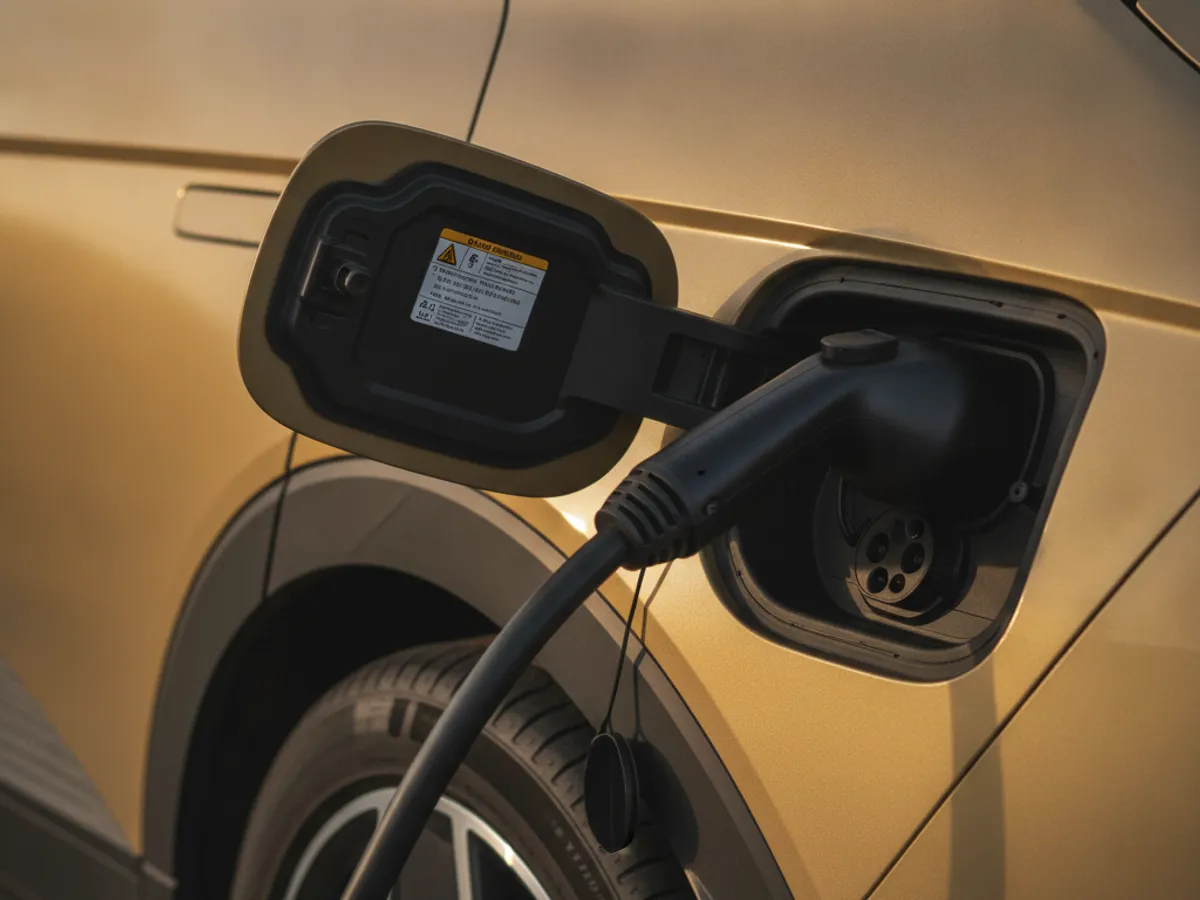
Hunting on a thin pack is a different problem
A backup site only helps if you can get there. Your range estimate doesn’t know the next kiosk is offline. It also doesn’t know a grade or packed freeway will cost extra. The CEC files don’t publish a leftover-percent rule for this choice. No verified figure for a safe buffer turned up in this research. Sit still and confirm a green stall in an app. Then drive that pin and nowhere else. Wandering between malls on a rumor turns a kiosk error into a freeway stop. If you’re already low, follow what to do before you’re actually stuck.
Tesla won’t turn this into an on-site charge. Tesla’s published roadside language on a depleted pack is transportation. It’s not a financially covered service on Tesla’s own page. Covered transport up to 500 miles is for a warrantable breakdown. That breakdown has to leave the car undrivable. Running out of charge sits outside that covered list. Confirm the current text on Tesla’s roadside page. The honest read is a tow path, not a charge at the car.
When a dead charger means a mobile charge at the car
Stop hunting when you’ve already failed two stalls, or two networks, at this lot. Stop when remaining range is too thin to test another pin. Stop when you have a clock you can’t slip. Stay with the car if you can nudge into a regular space.
Charge Pro OC is a referral line. It matches stranded EV drivers with independent local operators. It performs no work and owns no trucks. It employs no technicians and sets no prices. It publishes no arrival window and no hours. The operator quotes you before starting and bills you directly. Operators bring a 240V Level 2 source to the car. Teslas take a native NACS plug at the car. Other EVs use a CCS or J1772 adapter. They typically add 10 to 20 miles of range. That takes 15 to 30 minutes of charging. That 15 to 30 minutes is charging time, never an arrival time. They can also jump or replace a dead 12V battery on site. They handle Tesla and every major EV brand. Mobile EV charging is the page for how that match works.
If the kiosk still won’t start
You didn’t break the public charger. If you reseated the cable and tried a neighbor stall, stop. If the app restart didn’t help, stop spending range on the same error. Call (949) 444-0151 for a local operator match. Charge Pro OC connects you with a local operator. That operator quotes before any charging starts.
Frequently asked questions
Why won’t a public EV charger start a charging session?
Most misses are a loose connector or a stuck app handshake. A payment decline can look the same as a dead stall. A single stall fault is more common than a whole-station outage. Reseat the cable, then restart the network app. Try the stall next to you, then leave that unit.
Is it the charger or my car when a session won’t start?
Usually it’s the charger or the network. If the car charges at home, look at the stall. A vehicle-side charge fault tends to show on your dash. The kiosk error alone is a weak signal that the car is broken.
When should I stop looking for another charger in Orange County?
Stop when two stalls or two networks at this lot have failed. Stop when remaining range is too thin to test a new pin. Sit still and confirm a working backup in an app. Or request a mobile charge at the car.