When a Honda Prologue won’t start, the usual cause is a dead 12V battery. That’s true in an older Central Orange County apartment lot too. The traction pack can still hold plenty of energy. The small battery that wakes the car just sat too long without a plug you control. Santa Ana, Garden Grove, Orange, and Westminster still have buildings from before 1980. Plenty never got a 240-volt stall for residents. The Prologue rests between trips. Then the fob goes quiet.
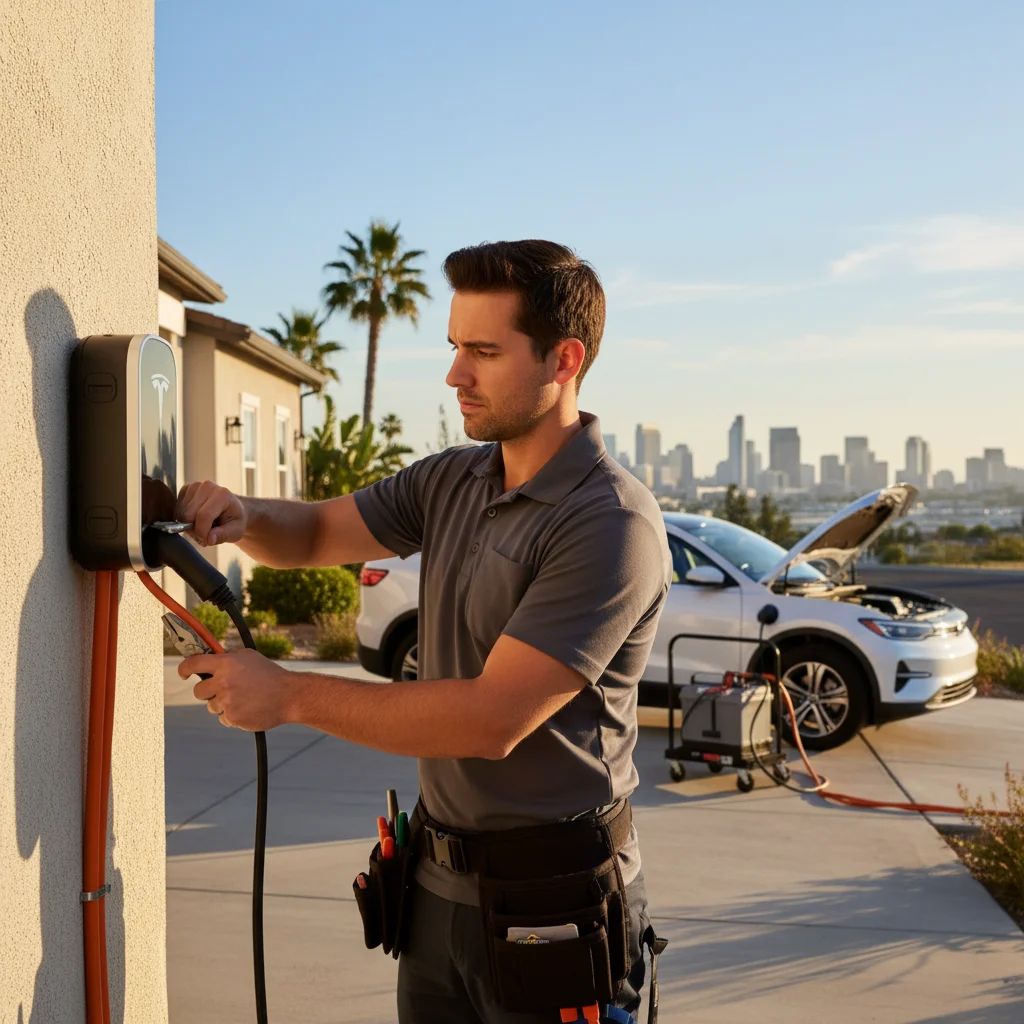
Orange County had 210,842 battery-electric cars on the road as of December 31, 2025. That’s the California Energy Commission’s own count. Honda’s Ultium three-row sits in that mix. It still needs a small 12-volt battery to boot every module. If that battery is flat, you get a dark car. Ready never comes. Charging often won’t start either.
The Prologue shares GM’s Ultium layout with the Chevy Blazer EV, the Equinox EV, and the Acura ZDX. Same contactors. Same 12V job. Same field fix. A ZDX in the household follows the same checks. See Acura ZDX won’t start: the 12V checks that matter.
Why the 12V strands a Honda Prologue
A full traction pack doesn’t start the car by itself. The 12V feeds the computers, the locks, and the dash. It also feeds the relays that close the high-voltage contactors. Flat 12V means those contactors never close. The Prologue looks fully dead even with range left in the pack.
The 12V is a small auxiliary battery, lead-acid or lithium. It’s sized like a gas car’s. It’s not the orange-cabled traction pack. You restore the low-voltage side so the car can wake. You never jump the high-voltage side.
Parked cars drain it slowly. Modules sip power for alarms, telematics, and keyless entry. In a pre-1980 Central OC apartment, you often don’t have a Level 2 cord in your own stall. Weekend drivers feel this first. The car sits Monday through Thursday. Friday, the fob does nothing.
That pattern is local, not generic. Central Orange County still has a lot of older two-story courts and carports. You’ll see them along the Santa Ana, Garden Grove, and Westminster grid. Those stalls were built for gas cars. They weren’t built around overnight EV charging you control. The county’s public map is a different story. CEC counted 7,095 public ports here as of the end of 2025. Tesla holds 59 percent of the public DC fast ports, 861 of 1,452. A Honda in a Central OC carport doesn’t live on Superchargers the way a Model Y does. The overnight sit is what flattens the 12V.
Orange County also runs 36.8 ZEVs per public port. The state average is 24.4. That ratio is why a parked Prologue in Santa Ana can sit longer than the owner planned. It’s not a reason to hunt a stall at midnight if the car already won’t wake.
The clues that point to the 12V
A weak 12V is easy to spot if you know the tells:
- The dash, cabin lights, and screen are dim or fully dark
- The fob range faded over the last few weeks
- The Prologue sat more than two weeks without a drive or a plug
- The charge-port door ignores you, and the doors won’t unlock
- You hear no clicks when you press the brake
Dim power that never reaches Ready is a borderline 12V. A fully dark car is usually a flat one. Either way, a jump on the labeled 12V points is the first field move. For the deeper why, see when an EV 12V battery dies on the road.
How to jump a Honda Prologue 12V
The Prologue keeps its 12V under the hood. That’s roughly the same spot as a gas car’s battery. Labeled jump terminals sit there for this exact mess. You’re waking the small battery. You’re not feeding the traction pack.
Get the hood open first. If the car is fully dead, the interior release may not fire. Check the owner’s manual for your model year before you force anything. Then clip a portable jump pack or a gas donor car to the labeled points.
A few rules that matter on any EV:
- Use only the labeled 12V jump points, never the orange high-voltage cables
- Use a jump pack or a gas donor, not another EV’s drive battery
- Once the dash wakes, leave the car on a few minutes before you disconnect
The full walkthrough that applies across brands is in how to jump start an electric car without making it worse. If the jump takes and then dies again, the battery is often finished. An operator can replace a dead 12V on site. That’s still a 12V job, not a pack job.
When it’s the pack, or a charge session that never starts
Sometimes the Prologue wakes fine and still won’t take you far. That’s a different problem.
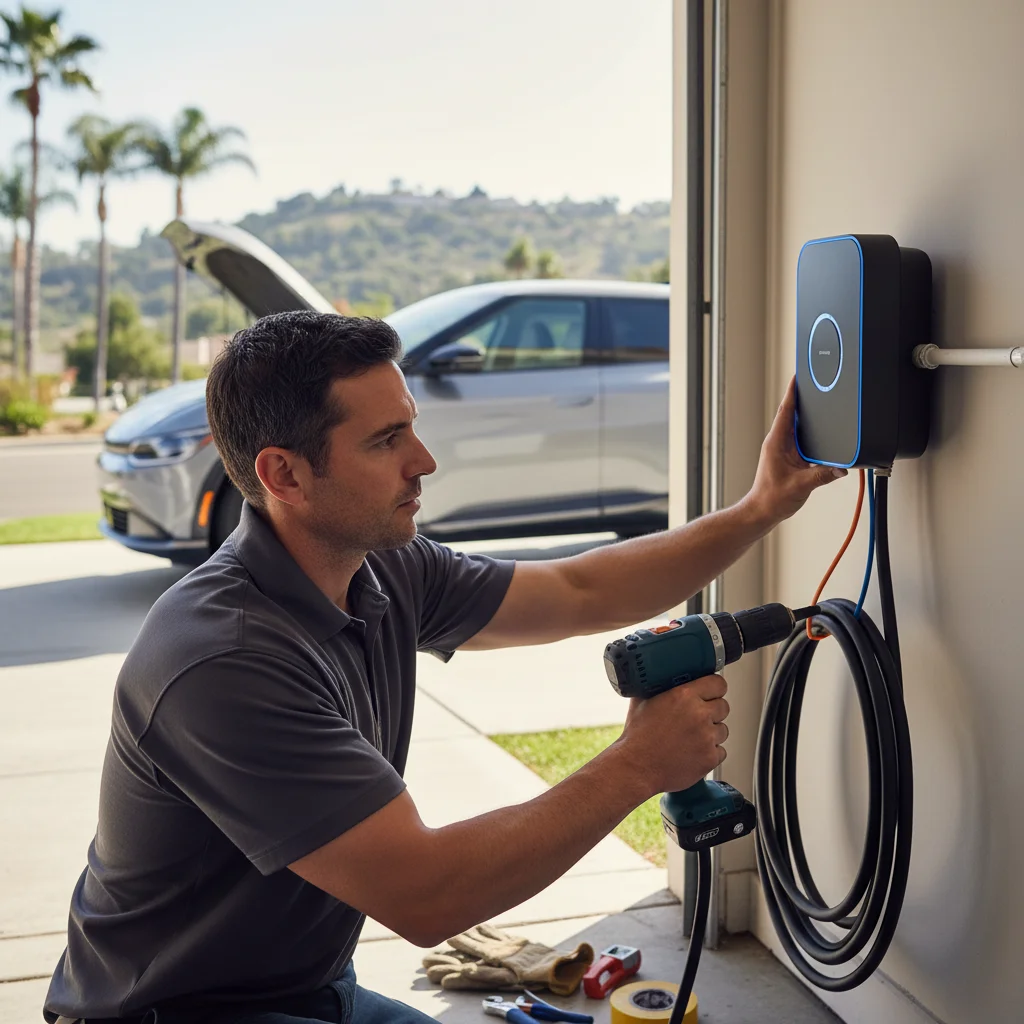
If the dash is bright and the car goes to Ready, check the range. At or near zero, you’re empty. You need energy in the traction pack. Charge Pro OC matches you with local operators. They bring a 240V Level 2 source to the car. They use a CCS or J1772 adapter for non-Tesla EVs. A typical session adds 10 to 20 miles of range. That’s in 15 to 30 minutes of charging. That’s charging time, not a promise of when someone arrives.
If the dash is awake and a stall still won’t start a session, you’re on the charge side, not the 12V. Ultium crossovers share that quirk. The Chevy Blazer EV 12V write-up covers the same platform. Try a different stall. Shade and a short wait often clear a stubborn session. Confirm the current stall status on the app before you wait.
If the connector won’t unlatch after a session, that’s its own fix. Use how to free an EV charge cable that’s stuck in the port.
Central OC sits, and the other ways a Prologue gets stuck
The apartment sit is the one this page is for. A family parks the Prologue for a week. That’s common in a pre-1980 Santa Ana or Garden Grove court. Nobody has a home EVSE in that stall. They come back to a car that won’t unlock. A 12V jump usually brings it back.
A 120V leftover cord in a carport can also fool you. The session stops overnight. The 12V keeps drawing. Morning looks like a dead car. Check the cord and the outlet before you assume the pack failed.
Empty pack is the other lane. A Garden Grove or Orange commute on SR-22 can burn range with the AC on. You roll into the lot with a live dash and no miles. That’s not a failed 12V. That’s an empty Ultium pack that needs a charge where it sits. Downtown Santa Ana has that same pattern. It shows up after a long day near 17th Street or 5th Street.
The Tesla stalls at 1008 17th St and 300 E 5th St are on the AFDC map. That’s 28 stalls and 20 stalls. They serve Tesla traffic. A Honda still needs a CCS stall, or a truck at the bumper. Electrify America at 440 N Euclid St in Anaheim lists 10 DC fast ports. Westminster Mall has a Tesla site at 1025 Westminster Mall, with 24 stalls. Garden Grove has Tesla sites at 12891 Harbor Blvd and 12161 Valley View St. Treat those as mapped sites. They aren’t a promise they’ll be open when you need them.
Tesla still dominates the county’s battery-electric fleet. CEC make data puts Tesla at 138,121 of 210,842 BEVs. That’s 65.51 percent, as of the end of 2025. Honda owners are in the other slice. Non-Tesla EV rescue in Orange County is the path when Superchargers aren’t your car.
What a field rescue looks like for a Prologue
Charge Pro OC is a referral line. It matches stranded EV drivers with independent local mobile rescue operators. It doesn’t own trucks. It doesn’t employ technicians. It doesn’t set prices or arrival times. The operator quotes you before starting, then bills you directly.
For a no-start, the operator tests and jumps the 12V on the spot. They can replace a finished 12V at the car. For an empty pack, out-of-charge recovery is the 240V charge at the bumper. Ten to 20 miles in 15 to 30 minutes of charging is the typical add. That’s enough to reach a stall you’ve already confirmed. It can also get you home if home is close.
They handle Tesla and every major EV brand. If the other car in the household is a Tesla, they can jump that 12V too. We serve every city in Orange County. Santa Ana, Garden Grove, Orange, Westminster, Tustin, and the rest of the county are in the service area.
Frequently asked questions
Why won’t my Honda Prologue start even though the pack is charged?
A charged traction pack doesn’t wake the car on its own. The 12V auxiliary battery powers the modules that close the high-voltage contactors. If that battery is dead, the Prologue can’t go to Ready, often can’t charge, and often won’t unlock. A labeled 12V jump is the first fix to try.
Can I jump-start a Honda Prologue like a gas car?
You jump the 12V battery, not the high-voltage pack. The Prologue has a 12V under the hood with labeled terminals. A portable jump pack or a gas donor car clips to those points. Never touch the orange high-voltage cables. If the car is fully dead, read the owner’s manual. The hood release may need emergency access first.
Is the Honda Prologue the same as the Acura ZDX or Chevy Blazer EV?
The Prologue, Acura ZDX, Chevy Blazer EV, and Equinox EV share GM’s Ultium platform. They use the same battery architecture, the same 12V dependency, and similar charging behavior. The ZDX is the Prologue’s closest twin. A 12V jump or a charge-session retry that works on one of those cars generally works on the Prologue too.
If the Honda Prologue still won’t start after a jump, call Charge Pro OC at (949) 444-0151. Tell the operator what the dash is doing. They quote before they start, and they bill you directly.