A Kia Niro EV that won’t start usually has a dead 12V. The traction pack often isn’t the problem. In older Central Orange County apartment lots, that small battery dies while the car sits. The dash stays dark. The start button does nothing. The pack can still be half full.
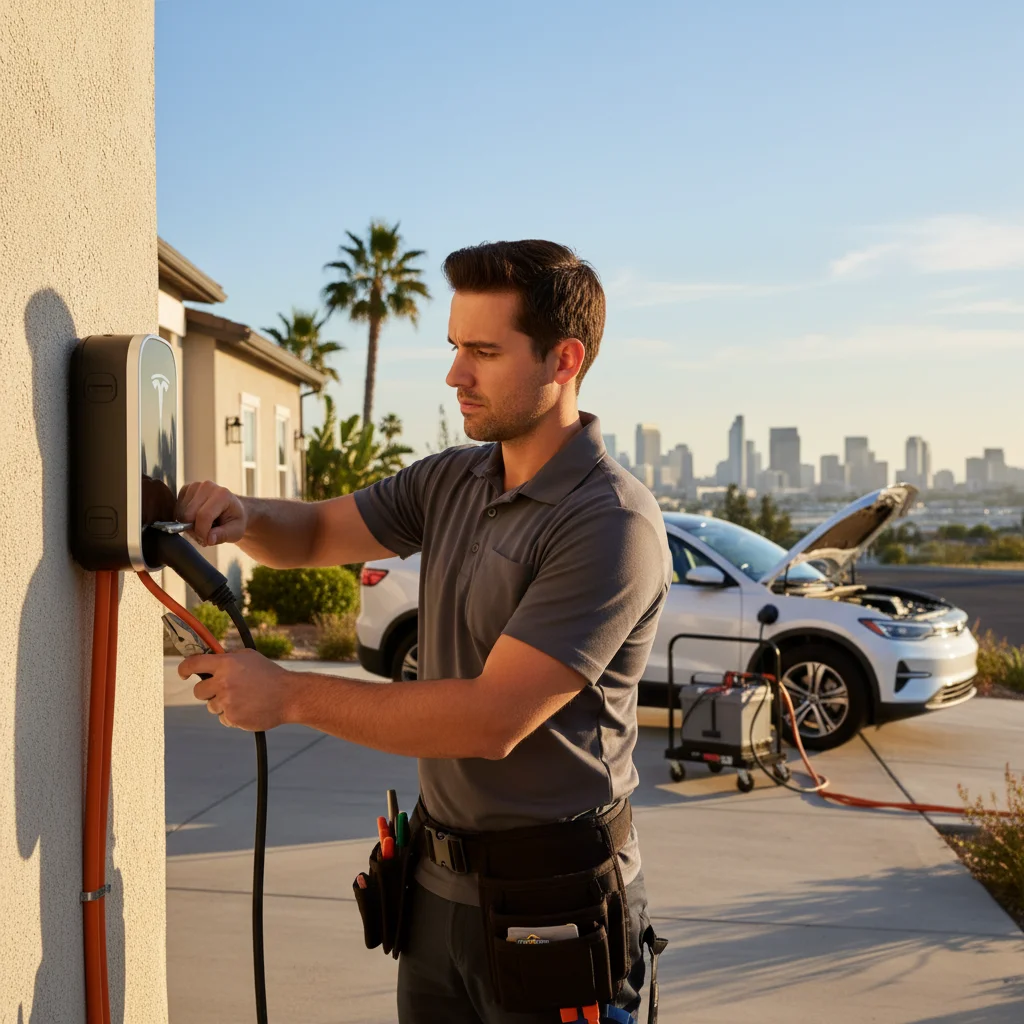
A dark dash in a Central OC carport
Santa Ana, Garden Grove, and Orange still have lots of older apartments. Carports and open lots are common here. A Niro EV can sit for days between short errands. The 12V keeps feeding modules, locks, and the alarm. Then one morning the car acts fully dead.
That pattern differs from an Irvine HOA garage. Central OC housing is denser and older. Street parking and uncovered stalls are part of daily life. The 12V still hates long sits.
CEC counted 210,842 Orange County BEVs as of December 31, 2025. Teslas were 138,121 of those BEVs, or 65.51 percent. A Kia Niro EV sits in the smaller slice. Public DC fast charging here is Tesla-heavy too. Tesla holds 861 of the county’s 1,452 public DC fast ports, about 59 percent.
The county had 7,095 public charging ports at the end of 2025. That’s 36.8 ZEVs per public port. California’s ratio was 24.4. That still doesn’t explain a dark dash in a carport. A silent Niro EV in Santa Ana is usually the 12V.
Dead 12V versus an empty traction pack
These two failures feel similar. The dash tells them apart.
A dead 12V looks like this. The cluster is black. The start button gives no click and no chime. The fob may not unlock. The locks may sound slow and weak. The car often sat for days with no drive.
An empty traction pack looks different. The dash still wakes. You get a low-battery or turtle warning. Doors and lights still work. The car drove until range ran out.
If the dash is dark, start with the 12V. If the dash is on and warning you, the pack needs energy. A jump won’t refill a flat traction battery. It also won’t fix a high-voltage fault. See when an EV 12V battery dies on the road for the sequence across brands.
One more tell: a dead 12V can block charging talk. The cable may not handshake. The car can’t “see” a plug. People then think the pack is empty. The computers are asleep.
What usually strands a Niro EV in the lot
Work through these first. Don’t assume the high-voltage pack failed.
A drained or aged 12V is the common one. The Niro EV uses a large lithium pack to move. A small 12V battery runs the computers. It also runs the relay that wakes that pack. If the 12V is down, nothing talks. Ready mode never arrives.
Long sits matter in apartment parking. Two quiet weeks in a Garden Grove stall can empty a weak 12V. So can a week of two-mile hops. Those trips never let the DC-DC converter catch up. The converter refills the 12V while the car is on. A car that only sits in Ready for a minute doesn’t help much.
A dead key-fob cell can mimic a no-start. Try the physical key if the doors ignore the fob. Then try start with the fob against the switch. Check your manual for the exact spot. Swap the fob battery if the car never sees the fob.
Loose or dirty 12V terminals can cause intermittent starts. You may also get random warning lights. You can inspect those if you can open the hood. Don’t pry on high-voltage orange cables. Those aren’t the 12V.
Repeated drains over a few days are a different problem. That can be a 12V that won’t hold a charge. It can also be a module that won’t sleep. That needs a Kia shop with a scan tool. So does a car that still won’t enter Ready after a solid 12V jump.
The 2019 to 2022 Niro EV shares this split-battery layout. The 2023-and-later redesign does too. The 12V still sits under the hood. It’s on the driver’s side, near the firewall, under a plastic cover.
Hyundai and Kia 12V no-starts look alike from the seat. If you also have an EV9 at home, run the same first checks. The Kia EV9 12V guide covers that sibling.
Jump at the posts, not the battery clamps
Kia gives you dedicated jump posts in the engine bay. Use those. Don’t clamp onto the 12V terminals themselves.
The positive post has a red cover marked plus. The negative is a chassis ground. It isn’t the battery’s negative stud. That ground path cuts spark risk next to the battery.
Here’s a calm sequence.
Set a portable jump pack so the leads reach the bay. Or park a donor car close enough. Open the red cover. Clip the red lead to the Niro EV’s positive post. Clip the other red lead to the donor positive, or the pack’s positive. Clip black to the donor negative, or the pack’s negative. Clip the remaining black lead to unpainted metal on the Niro EV. Wait a couple of minutes. Press start.
If the cluster lights and Ready comes on, pull the cables in reverse. Black first, then red. Don’t shut the car off in the same stall if you can avoid it. Drive so the DC-DC converter can refill the 12V. A short crawl to the next block isn’t enough. An immediate shutdown can leave you dark again.
Skip a heavy diesel-truck pack. The Niro EV’s 12V is a small auxiliary battery. An ordinary 12V jump pack is enough. For a brand-by-brand method, see how to jump start an EV on site.
If you can’t get the hood open, stop. If the jump doesn’t hold, stop. A local operator can jump or replace that 12V on site. They can also feed 240V Level 2 into the CCS port. That’s the move if the traction pack is the real problem.
Battery Save on the 2023 and later Niro EV
Later Niro EVs include a 12V Battery Save toggle. It sits in the vehicle settings. Path: Settings, then Vehicle, then 12V Battery Save, then On.
When it’s on, the car supports the 12V more while you charge the pack. It also helps while you sit plugged in. It won’t resurrect a battery that already failed. It can help if you park for a week without a drive.
Apartment life makes that toggle worth a look. Many Central OC drivers go days between longer drives. Battery Save isn’t a substitute for a healthy 12V. It’s a setting, not a repair.
If Battery Save is on and the 12V still dies within days, stop. Don’t make morning jumps a habit. The battery likely needs replacement. Or a shop needs to find a parasitic draw. A second jump that dies in the grocery lot is a clue, not a plan.
If the dash is awake and the pack is empty
Then you need energy in the traction pack. A 12V jump won’t do that job.
A Niro EV charges on CCS. One named site is Electrify America at 440 N Euclid Street in Anaheim. AFDC lists ten DC fast ports there. Tesla Superchargers sit at 1008 17th Street and 300 East 5th Street in Santa Ana. Garden Grove has Tesla stalls at 12891 Harbor Boulevard and 12161 Valley View Street. Those Tesla stalls are Tesla network sites. A Niro EV uses CCS. Tesla’s Magic Dock at 24372 Rockfield Boulevard in Lake Forest lists CCS1 plus NACS.
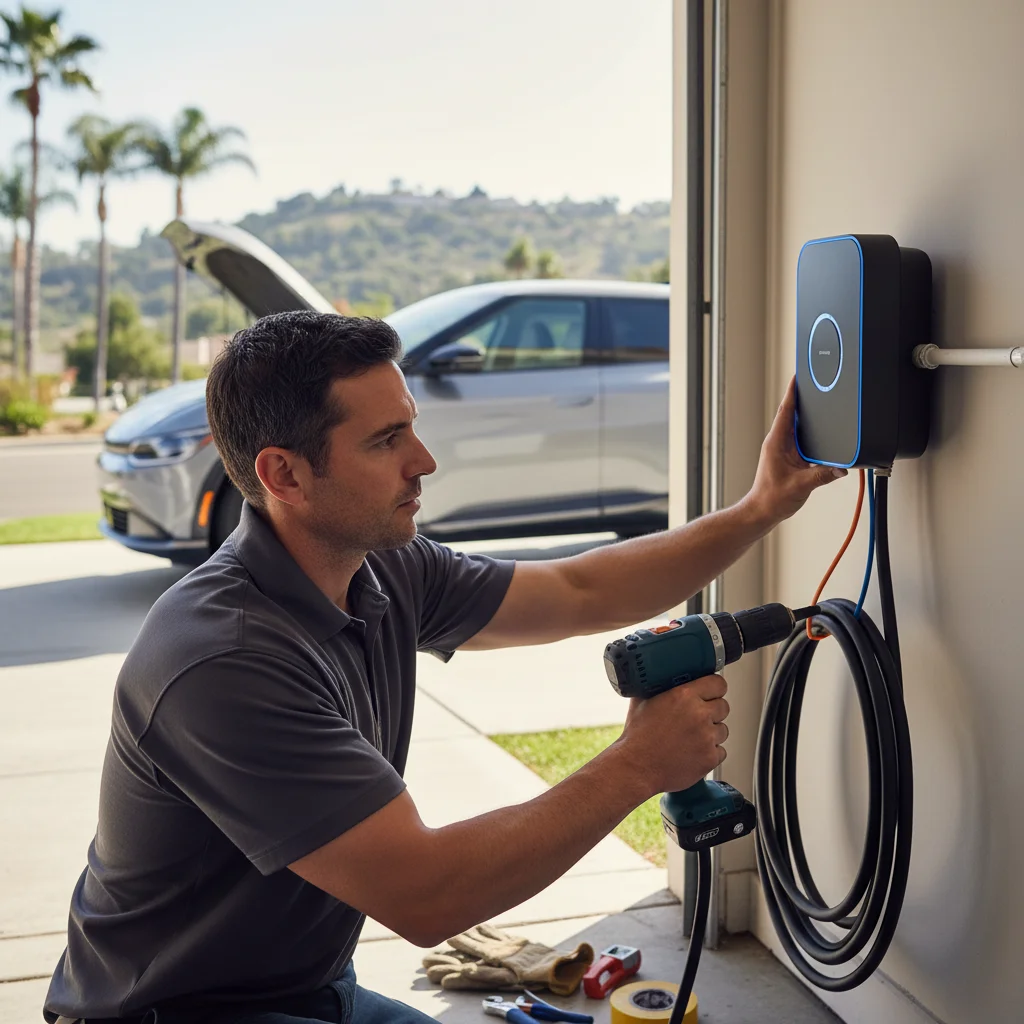
You don’t have to hunt a stall first. Independent operators Charge Pro OC refers can bring 240V Level 2 to the car. They use a CCS adapter for a Niro EV. Charging time is typically 15 to 30 minutes. That’s charging time, never travel time. That session typically adds 10 to 20 miles of range. The operator quotes you before they start. They bill you directly.
That’s the non-Tesla EV rescue path. It’s built for CCS cars, not only Teslas. AFDC shows 175 non-Tesla DC fast stations in the county. That’s 591 non-Tesla DC fast ports. Tesla still holds most of the fast-port count. A Niro EV owner should plan around CCS, not around a Tesla-only stall.
In 2026 Q2, Orange County’s new light-duty ZEV share was 24.77 percent. The state was 19.09 percent. More EVs now sit in the same apartment lots.
Central OC lots, freeways, and the next move
Older apartments along Harbor Boulevard in Garden Grove often mean overnight sits. Downtown Santa Ana has the same rhythm. So does the grid near the SR-22 crush in Orange. The car is fine on Friday. Monday morning it’s silent.
Coastal cities have a different housing mix. South-county planned streets lean on HOA garages. Central OC is the apartment-lot version of a Niro EV no-start. Short trips, dense blocks, and cars that sleep in uncovered stalls.
If you stall on I-5, I-405, or SR-22, stay put. Do that only if it’s safe. Hazards on. Don’t walk a live lane. A jump or a Level 2 charge at the bumper beats a speculative tow. Towing a dead EV is a last move, not a first one.
Downtown Santa Ana has its own garage and curb pattern. The Santa Ana stall guide walks through a charge where you sit. City-level coverage for that core is on the Santa Ana page.
When you call, give the lot type. Carport, structure, or street. Give the floor and stall if you have them. Say it’s a Kia Niro EV on CCS. Say whether the dash is dark or awake. That split tells the operator whether they’re jumping a 12V or charging the pack.
What a referred operator can do, and what we don’t do
Charge Pro OC doesn’t own trucks. We don’t employ technicians. We don’t set prices. We don’t promise an arrival window. We match stranded drivers with independent local mobile rescue operators. The operator who takes the job talks to you, quotes you, and does the work.
What those operators typically bring is simple. A 240V Level 2 source. A native NACS plug. CCS or J1772 adapters for non-Tesla EVs. They can jump or replace a dead 12V on site. They handle Tesla and every major EV brand, including Kia.
If roadside membership is your first call, ask a direct question. Ask whether they jump a 12V, or only tow. Many plans still think in gas-car terms. This roadside jump-start explainer lays out that split.
We serve every city in Orange County. The brand connects you with a local pro. It doesn’t perform the work.
Frequently asked questions
Why won’t my Kia Niro EV start if the main battery still has charge?
The 12V runs the modules that wake the traction pack. If that small battery is dead, the car won’t see the start button. It also won’t handshake with a charging cable. Jump the 12V first. Don’t assume you need a DC fast stall.
Can I jump a Niro EV in an apartment carport?
Yes, if you can reach the under-hood jump posts and a jump pack. Use the marked positive post and a chassis ground. If the hood won’t open, call for on-site 12V help. If the jump won’t hold, do the same. A referred operator can do that work at the stall. They quote before they start.
What if the dash is on and the Niro EV still won’t move?
Then you’re likely looking at the traction pack. It could also be a high-voltage fault, or a Ready-mode interlock. A 12V jump won’t fix an empty pack. Ask for a CCS charge at the car. Ask for a shop scan if warnings persist after the 12V is healthy.
If those checks still leave you stuck, call (949) 444-0151. Leave the city, the lot details, and that you drive a Kia Niro EV. The operator who takes the job quotes you before any work starts.