Tesla Insurance roadside, if it appears on your declarations, is still a tow. It’s not a charge at the car. This research couldn’t open Tesla Insurance’s current policy text. The Tesla site returned a block to automated fetches on this run. Tesla’s published roadside-assistance language, as indexed, is the part we can stand on. A depleted pack isn’t a financially covered service. Tesla can still help, and that help is transportation. For Orange County Tesla owners, that’s the real answer.
Check the form you actually bought
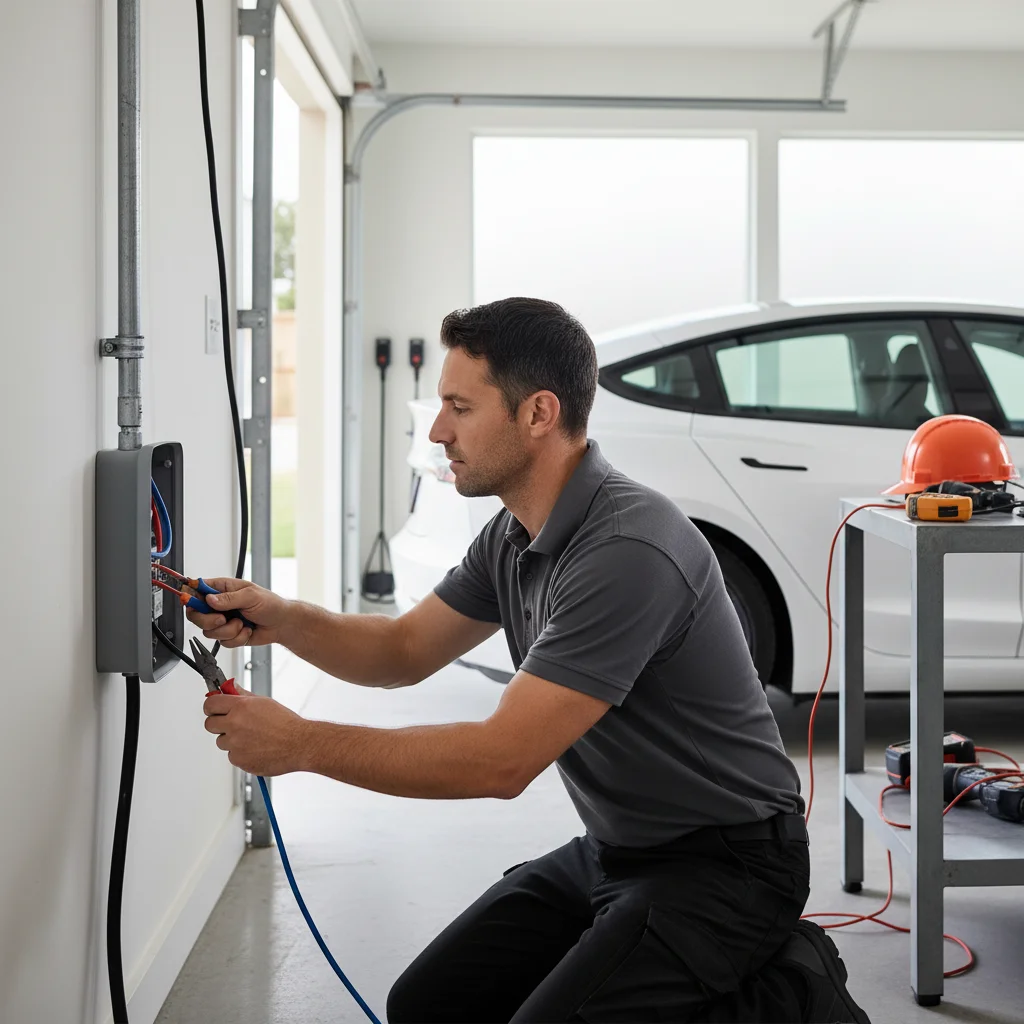
Tesla Insurance is an auto policy you buy. Tesla Roadside Assistance is a separate Tesla program. Owners mix them up because both live in the Tesla app. The insurance form, if you bought it, is the document to read. If roadside is on that form, look for towing and lockout. We couldn’t verify those line items from a Tesla Insurance page we could open. Your declarations page is the only authority here. Open the Tesla app, pull insurance, and read the roadside section yourself.
Tesla’s manufacturer roadside page is a different file. Search indexes of that page say Tesla can assist when the pack is empty. They also say that help isn’t financially covered. The same page, as indexed, describes transport of up to 500 miles. That ride goes to the nearest Service Center for a warrantable breakdown. The breakdown has to leave the car undrivable. Running out of charge sits outside that warrantable path. Confirm both wordings on Tesla’s current roadside page before you file anything. Tesla also posts a North America roadside policy PDF you can open.
The practical split is simple to hold onto. A covered breakdown may get a covered tow toward a Service Center. An empty pack gets a ride to a stall. You shouldn’t expect that ride to sit under the warrantable umbrella. Insurance roadside, even when it dispatches, still lives in that transport family. It isn’t a 240-volt truck adding range at the bumper.
See what Tesla roadside covers when the pack is dead.
Tesla’s published answer is transport
Tesla’s Model Y owner’s manual is clearer on the physics. Once range is gone, the low-voltage battery can lose support. The car may then need an external power supply. Only then will the high-voltage pack take a charge. That’s a technical fact, not an insurance clause. A hook that drags the car to a stall doesn’t fix a dead 12V. A Level 2 source at the car can.
Tesla’s Santa Ana service listing publishes the roadside number 877-798-3752. You can start with that number tonight. You shouldn’t treat that line as on-site charging. Tesla’s indexed roadside copy tells you to arrange transportation. It doesn’t describe a mobile charger rolling to the shoulder.
Orange County has Tesla Service Centers listed in several cities. Those listings include Costa Mesa, Buena Park, Santa Ana, Irvine, Anaheim, and Aliso Viejo. Costa Mesa shows two separate service listings on Tesla’s map. Street addresses on Tesla’s findus pages weren’t opened directly in this research. We’re not printing those street addresses in this piece. A tow toward a Service Center is a shop trip. It isn’t 10 to 20 miles of range added on site. That add typically takes 15 to 30 minutes of charging. That window is session time on the pack. It isn’t an arrival promise from anyone.
See what Tesla roadside covers in Orange County for the covered-versus-not list.
Why this lands harder in Orange County
Orange County is a Tesla-heavy county on paper. The California Energy Commission vehicle file counts 138,121 Teslas here. That file’s data is as of December 31, 2025. That’s 65.51% of the county’s 210,842 battery-electric cars. Teslas are 5.59% of all Orange County light-duty vehicles. The county is 6.4 points more Tesla-concentrated than California as a whole.
Those cars still strand in ordinary Orange County places. They sit in lots in Anaheim, Irvine, Tustin, and Santa Ana. They sit near Superchargers they can no longer reach. The car is already sitting where it died. A policy that answers with a tow still has to move it.
The county isn’t short of Tesla DC fast stalls as a map. AFDC station data, filtered to Tesla, public, and available, is the source. It shows 48 Supercharger sites and 861 DC fast ports inside the Orange County boundary. Tesla holds 59% of the county’s public DC fast ports. Those counts don’t help if you’re already at zero. A garage, a gated street, or a live lane still leaves the car stuck.
CEC public-port counts as of December 31, 2025 are the other file. Orange County shows 7,095 public ports and 260,833 ZEVs. That’s 36.8 ZEVs per public port, against 24.4 statewide. More EVs share each public plug than the California average. You can still be stuck at the car. Superchargers elsewhere in the county don’t move this one. Don’t treat that as a missing charger on your block. Treat it as a car that can’t drive to the stall.
Empty pack, dead 12V, or a real breakdown
Three failures get lumped under “Tesla won’t move.” They aren’t the same claim on a policy.
An empty traction pack is a range problem. Tesla’s indexed roadside language treats it as transportation, not a covered charge. Insurance roadside, as far as we could verify, doesn’t rewrite that physics. The operators Charge Pro OC connects you with bring a 240V Level 2 source. They bring that source to the car. Teslas take a native NACS plug on that truck. Non-Tesla EVs use a CCS or J1772 adapter. They typically add 10 to 20 miles of range. That add takes 15 to 30 minutes of charging. That’s time on the plug, not a dispatch clock.
A dead 12V is a different car entirely. Lights, screens, and door handles go dark while the big pack still has energy. An insurance dispatch that sends a hook still solves the wrong job. You need a Tesla 12V jump at the car, not a flatbed first. Run how to tell a Tesla 12V is dead before anyone straps the chassis.
A warrantable breakdown is the third bucket to separate. That’s the path Tesla’s indexed policy ties to covered transport toward a Service Center. Confirm the current wording on Tesla’s own page. Don’t assume an empty pack qualifies as a breakdown.
What the truck that shows up can actually do
Most vendors Tesla or an insurer send already know how to tow. Not every truck carries a 240-volt source on board. If you need to roll to a Supercharger under your own power, skip the hook. If you’re in a live lane, the car may have to leave the pavement. A tow can still be the right call then.
Orange County’s Supercharger map is useful once the car can roll. Anaheim has Tesla sites along Lincoln, Katella, Euclid, Imperial, and Santa Ana Canyon Road. Costa Mesa has sites on Bristol, Coast Drive, and Hyland. Fullerton has Tesla sites on Harbor and Orangethorpe. Fountain Valley has Tesla sites on Newhope and Warner. Huntington Beach has a Tesla site on Warner Avenue. Mission Viejo has Crown Valley and The Shops at Mission Viejo. Laguna Hills has Tesla sites on Moulton and Cabot. Lake Forest has Muirlands and a newer Rockfield Magic Dock site. Those are AFDC records, not a promise that a stall is open tonight.
The US Department of Energy AFDC locator is the public map to check before you guess. Charge Pro OC doesn’t set prices, hours, or arrival windows. The independent operator quotes you before any work starts, and bills you directly.
When you need charge at the bumper, use Tesla roadside rescue through the referral line.
Read your Tesla Insurance page before you need it
Do this on a quiet night, not on the shoulder.
Open the Tesla app and find Tesla Insurance if you bought it. Read the roadside paragraph on the declarations page. Write down whether lockout, a flat, and towing appear. Write down any mileage cap or incident limit if the form lists one. We’re not printing a cap here because we couldn’t verify Tesla Insurance’s current numbers. An invented mile limit wouldn’t help you tonight.
Separately, open Tesla’s roadside-assistance page and the North America roadside policy PDF. Confirm the depleted-battery sentence on that page. Confirm the warrantable-breakdown transport sentence while you’re there. Save Tesla’s roadside number, 877-798-3752, as a contact. Save a local backup number in the same list.
If your insurance card isn’t Tesla’s, read AAA versus a local Tesla rescue.
Charge Pro OC matches stranded EV drivers with independent local mobile rescue operators. It doesn’t do the work, own trucks, or employ technicians. The brand serves every city in Orange County. The operator who rolls is the one who does the work.
If you’re already stuck with an empty pack or a dark 12V, call (949) 444-0151. Tell the operator where the car sits and what the screens show. They quote you before any work starts.