A Cadillac Lyriq that won’t start in Orange County is usually the 12-volt battery. The Ultium pack can still hold range while the car looks dead. Dark glass and quiet locks point at the small battery. That battery wakes the computers. It doesn’t turn the wheels.
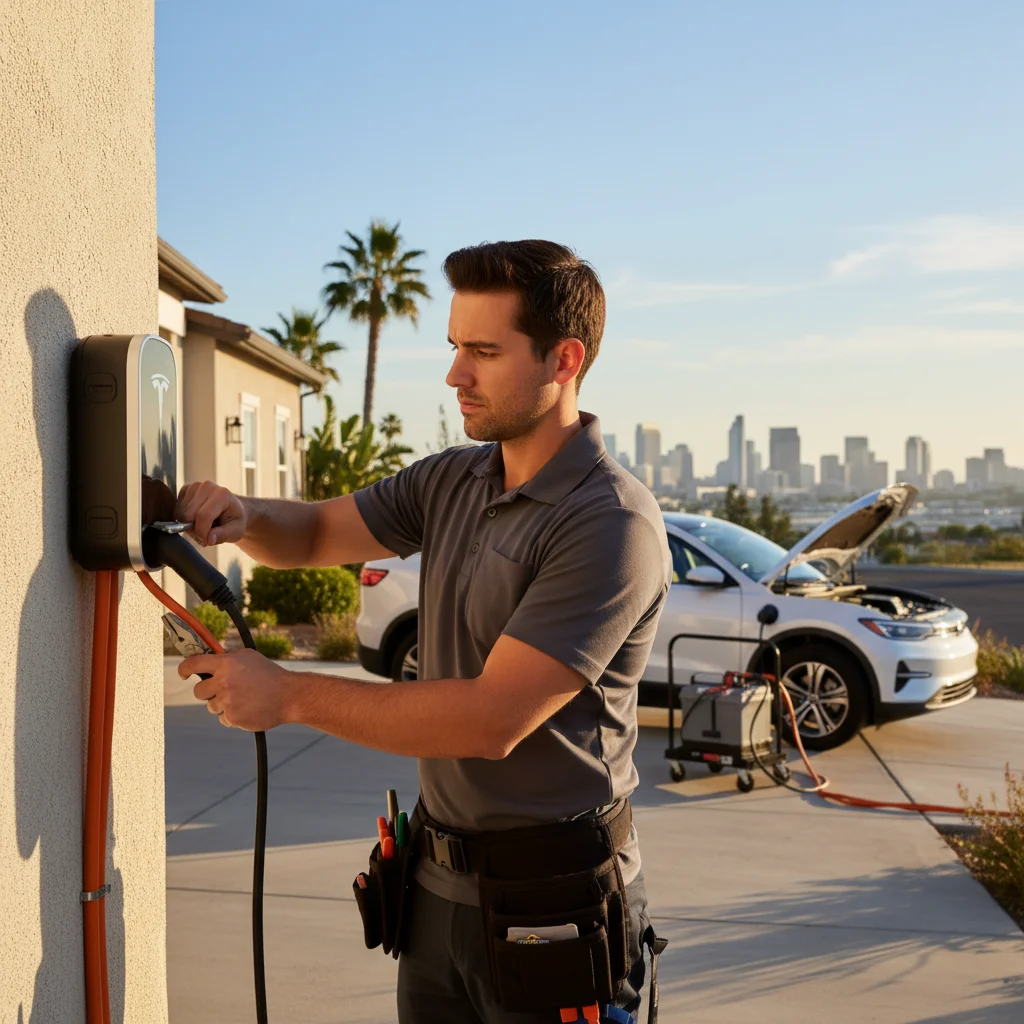
That split matters in this county. The California Energy Commission counted 210,842 battery-electric vehicles here as of December 31, 2025. Teslas make up 65.51% of those BEVs. GM Ultium models like the Lyriq sit in the other share. They show up in Irvine office parks and Anaheim event decks. They also park on coastal streets from Costa Mesa through Newport Beach.
A tow should wait. Check the 12V path first.
Why the Lyriq can sit dead with miles left
Every EV uses two batteries. The traction pack drives the motors. The 12-volt battery runs locks, screens, and body modules. It also powers the computers that bring high voltage online. If that small battery is flat, nothing boots. Miles left in the pack don’t help yet.
On the Lyriq, the auxiliary battery lives in the front trunk. It sits toward the driver’s side under a plastic cover. You don’t lift a gas-car hood. Open the frunk from inside if you can. The key fob can work too, if a little 12V remains.
A fully dead 12V kills the frunk latch as well. Cadillac’s owner’s manual describes an emergency frunk release. The cable runs along the driver’s side of the frunk floor. It sits behind the front bumper cover. If you can’t find it, stop. Don’t pry the lid.
Jump points are in that same frunk. They sit on a dedicated bar, not on the battery posts. The positive post has a red cap. The ground is a bare bolt on the driver’s-side chassis rail. Put a jump pack on those points. Skip the battery posts.
Wait about a minute after you connect. Then press start. Hitting the button too soon looks like a failed jump.
What the 33-inch display is telling you
The Lyriq’s wide display is the fastest clue. It needs 12-volt power before the rest of the car wakes. Watch the glass before you call a hook.
| What you see | Likely cause |
|---|---|
| Totally dark, no dome light, fob silent | 12V is fully dead |
| Dark screen, doors still unlock | 12V is low, not empty |
| Screen flashes on, then off | Module boot loop |
| Screen loads, service warning, no Ready | Ultium fault after a reset |
| Charge port locked icon | Latch error blocking Ready |
A black cabin and a dead fob is the 12V case. A screen that wakes and dies is often a software hang. A normal screen plus a service warning is different. Try a power cycle first. If the warning stays, that’s dealer work.
Ultium cars can also refuse to start when the 12V looks fine. Modules get stuck after a long sit. They also hang after a charge that quit early. An over-the-air update that didn’t finish can do the same. You may get a brief Ready. The car may roll a few inches, then drop out. The app can still show a healthy pack. The car still won’t go.
Don’t force a charge on a Lyriq with active high-voltage warnings. That needs a Cadillac scan tool. It isn’t a curb experiment.
Lot checks to run before anyone hooks the car
Stay with the vehicle. Don’t hunt a stall until you know which battery failed.
- Watch the display and the locks. Total silence points at 12V.
- Open the myCadillac or OnStar app if it still connects. A normal pack percent with a dead car is a 12V story.
- Try the fob and the interior frunk release. If either works, you can reach the jump points.
- If nothing responds, find the emergency frunk release in the manual. Don’t force the lid.
- After a jump, wait, then press start once. Don’t mash the button.
- If it starts and then dies again, the 12V needs replacement. Another jump won’t last.
- Only then consider an empty pack, a latch fault, or a dealer tow.
A jump that brings the car back is a start, not a finish. If it dies again in the same lot, plan a replacement. When an EV 12V dies on the road, the whole car can look like a failed pack. It usually isn’t.
How no-starts show up across Orange County
This county isn’t one parking pattern. Coastal lots, inland event decks, and South County garages fail in different ways.
In Irvine, the Lyriq often sits in a workplace structure or an apartment garage. The pack can be fine. The 12V quietly drains overnight. Spectrum Center has a Tesla Supercharger at 950 Spectrum Center Dr. That stall doesn’t wake a Lyriq that never reaches Ready. You can’t drive to a charger if the car won’t boot. Irvine roadside help is built around that garage problem.
Anaheim is the all-day parking version. Theme-park and stadium decks hold cars for hours in the heat. You come back to a black screen. Electrify America at 440 N Euclid St has 10 DC fast ports. Those stalls help only after the 12V can boot the car. Until then, the lot is just a place to stand.
Coastal days run the other way. Huntington Beach and Newport Beach trips mean a long sit after the drive in. Fashion Island has Electrify America at 401 Newport Center Dr, with 8 DC fast ports. That’s useful if you can still move. A dead 12V in the structure still needs a jump at the stall. Walking across MacArthur doesn’t reboot the computers.
Costa Mesa sits between the coast and the 405. Office lots and South Coast decks see the morning version. The car sat overnight. The 12V is tired. The app still shows miles. Once it wakes, Costa Mesa Superchargers at 1475 S Coast Dr are Tesla-only. A Lyriq still needs CCS.
If the car can roll after a jump, look at Lake Forest. The Tesla site at 24372 Rockfield Blvd is listed as Magic Dock. It carries CCS1 and NACS. It’s a Tesla fast site that can serve a non-Tesla plug. Confirm the connector on the stall before you count on it.
North County adds heat and long sits. Harbor lots in Fullerton and the auto row in Buena Park are typical. South County hills in Mission Viejo change the drive after you’re moving. They don’t change the first check. The 12V still comes first.
Santa Ana mixes downtown decks with workplace lots. Tesla Superchargers at 1008 17th St don’t help a Lyriq that can’t enter Ready. Get the 12V alive first.
If you’re already on a shoulder, stay put. Don’t walk a dead Lyriq toward a stall you can’t reach. Empty-pack cases on the I-405 shoulder start with the same rule. Stay with the car.
Jump, reset, or charge at the curb
Three problems get mixed up. They aren’t the same job.
A dead 12V needs a jump, and often a replacement on site. The safe jump-start steps apply to the Lyriq. Use the frunk jump bar. Wait, then start.
A module hang needs a power cycle. Open the frunk. Disconnect the 12V negative terminal. Wait a full two minutes. Reconnect. Let the relays click. Then try a normal start. That clears sticky module memory. It doesn’t repair failed hardware.
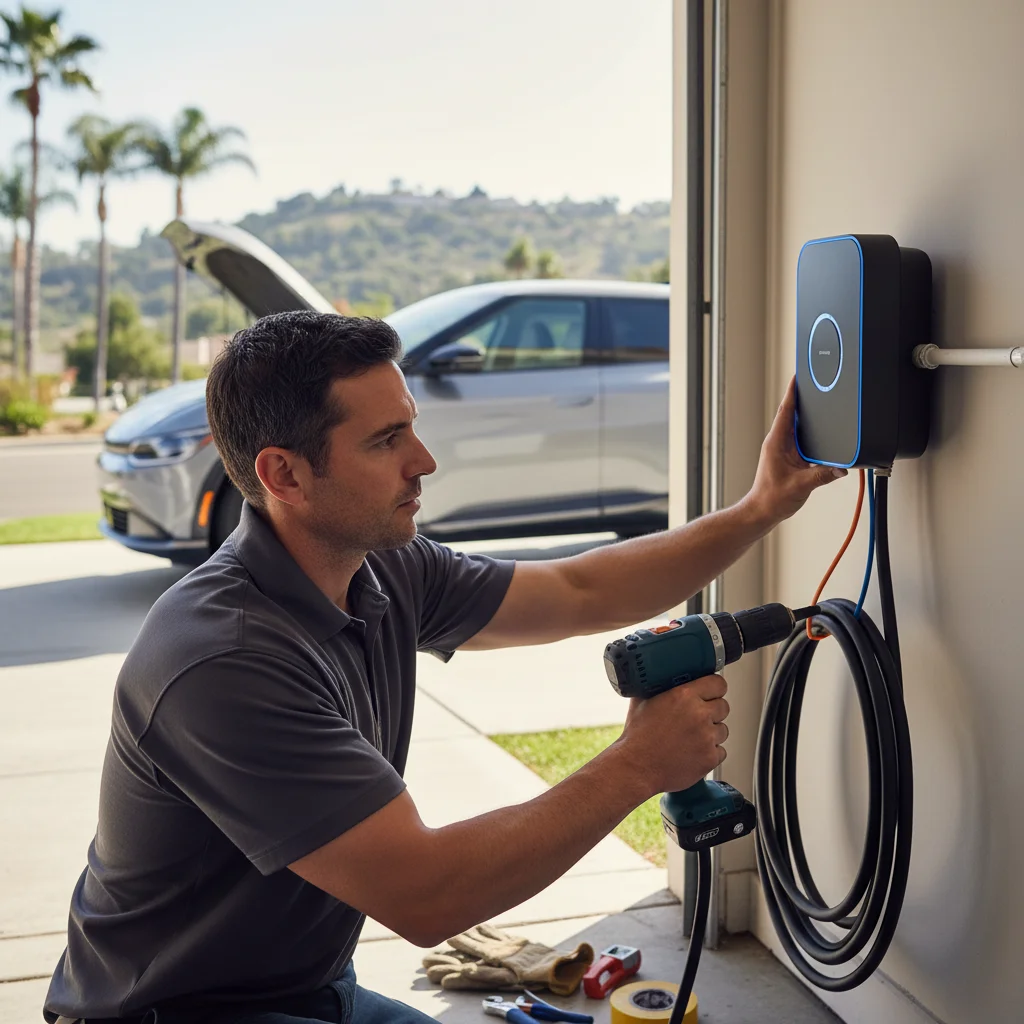
An empty Ultium pack needs energy at the car. Charge Pro OC is a referral line. It matches you with independent local mobile rescue operators. Those pros bring a 240V Level 2 source to the vehicle. They use a CCS adapter for a Lyriq. A typical session adds 10 to 20 miles of range in 15 to 30 minutes of charging. That’s charging time. It isn’t a promise of when someone arrives. The operator quotes you before any work starts. The operator bills you directly.
Non-Tesla EV rescue is the path for GM Ultium cars, including the Lyriq. If the pack is empty, out-of-charge recovery is the charge-at-the-car option. A Cadillac Escalade IQ no-start follows the same 12V-first pattern. The Escalade IQ checks help if you’re comparing GM’s bigger EVs.
Don’t start with a flatbed. Towing a dead EV is the last move. Wake the car, or add enough range to roll, before anyone hooks it.
When to stop and go to a Cadillac dealer
A jump or a two-minute disconnect fixes many lot no-starts. It doesn’t fix everything.
Stop DIY if any of these show up. The service warning returns after a clean start. Ready comes on, then the car dies after a few feet. You can’t reach the emergency frunk release. The charge port won’t unlatch after the 12V is healthy. You smell heat, see damage, or the pack won’t take a charge once the car is awake.
Take those to a Cadillac dealer. Tesla service shops in Costa Mesa, Irvine, and Anaheim aren’t the right door. Buena Park, Santa Ana, and Aliso Viejo Tesla shops aren’t either.
Orange County’s public charging map is large on paper. The Energy Commission counted 7,095 public ports as of December 31, 2025. That includes 5,600 public Level 2 ports and 1,475 public DC fast ports. AFDC data shows 223 DC fast stations and 1,452 DC fast ports countywide. Tesla holds 861 of those fast ports. Networks outside Tesla hold 591. A Lyriq still needs CCS. It still needs a living 12V before any of those stalls matter.
Orange County holds 12.02% of California’s battery-electric vehicles, on 8.33% of the state’s light-duty fleet. Lyriq no-starts aren’t rare here.
Frequently asked questions
How do you jump a Cadillac Lyriq in a parking lot
Use the frunk jump bar, not the battery posts. Positive goes to the red-capped post. Negative goes to the nearby chassis ground bolt. Wait about a minute, then press start. If the frunk won’t open, use the emergency release in the manual. If you can’t reach it, wait for a pro. Don’t force the lid.
Can a Lyriq block Ready with a charged Ultium pack
Yes. A stuck module can block Ready even with a full pack in the app. Disconnect the 12V negative for two minutes. Reconnect, then try again. If the warning stays, that’s a dealer scan. It isn’t another jump.
What should you do in Orange County instead of towing first
Run the 12V checks, then decide. A jump or a short 240V charge at the car usually beats a hook. Charge Pro OC connects Lyriq drivers with local mobile operators across the county.
If your Cadillac Lyriq won’t start, call (949) 444-0151. The operator quotes before starting.