A Subaru Solterra can look totally dead after a night in an OC lot. The usual cause is a failed 12-volt battery. The traction pack can still hold plenty of range. That small battery wakes the locks, screens, and computers. When it fails, the fob and dash go silent. The READY light never comes on at all. Restoring 12-volt power at the correct posts comes first.
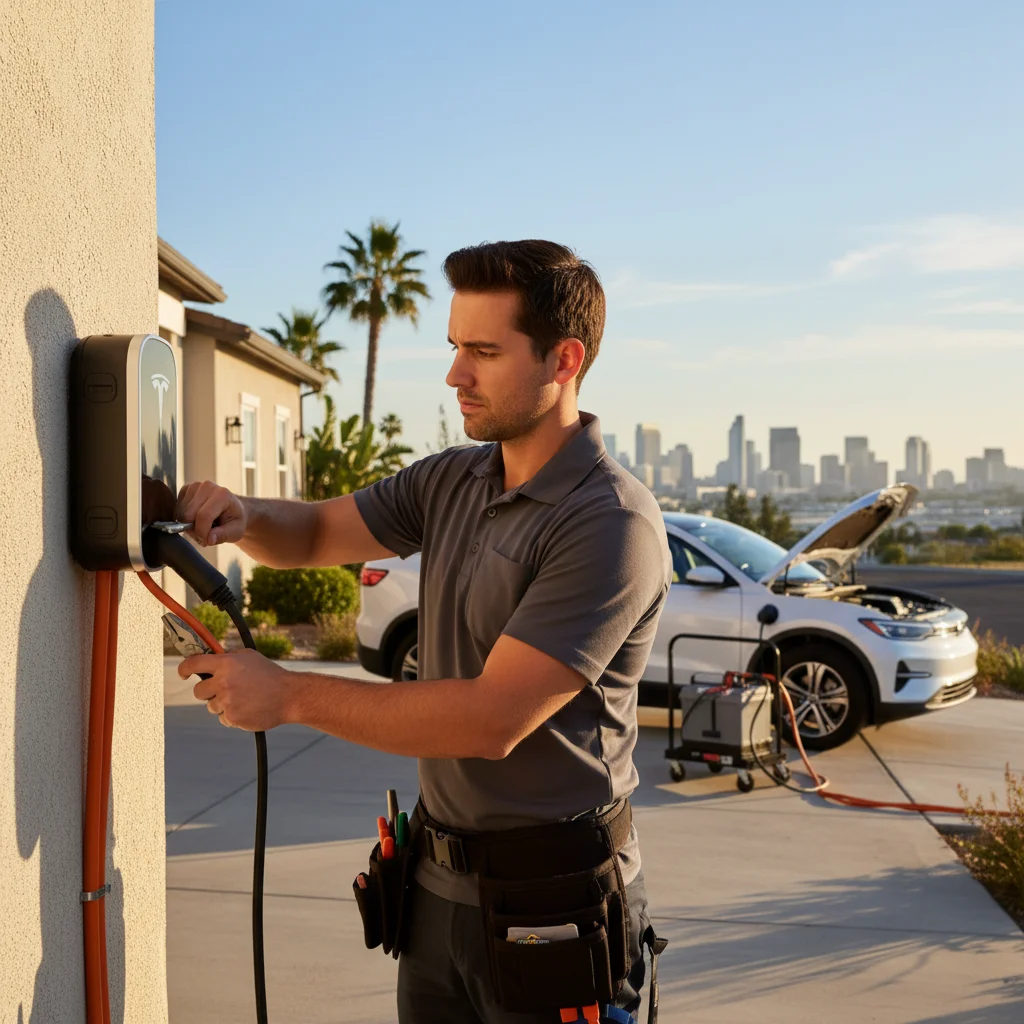
After a night in an Orange County lot
You left the car in an Irvine garage. Or it sat in an Anaheim structure through a long park day. This morning the key fob does nothing at all. The screens stay dark when you press Power. A lot of people assume the pack is empty, and it usually isn’t. That’s the overnight pattern on this car.
The California Energy Commission counted 210,842 battery-electric cars in Orange County. That’s the count as of December 31, 2025. Teslas make up 65.51 percent of those BEVs. A Solterra sits in that remaining share. Tesla-focused stall advice doesn’t plug a Solterra. The Solterra uses a CCS charge port, not a Tesla plug.
The same silent-morning call shows up in Costa Mesa parking structures. It shows up on Huntington Beach side streets after a long beach day. It shows up in Tustin office parks and Santa Ana lots. The car was fine when you locked it. Hours later the 12-volt has dropped too far to boot. A dark Huntington Beach lot after a long day is the same 12-volt problem.
Two batteries, and only one wakes the car
The Solterra carries two separate batteries on board. A high-voltage pack is what moves the wheels. A conventional 12-volt lead-acid battery runs every low-voltage circuit. Those circuits include the computers that wake the pack. That order is the whole story here. If the 12-volt is dead, the pack stays locked out. Range from the last drive doesn’t matter here. A Solterra showing 70 percent can still refuse to start.
The 12-volt is a standard lead-acid unit, not lithium. It sulfates and weakens the way a gas-car battery does. This EV has no engine idling to keep that battery topped up. A weak 12-volt tends to fail quietly overnight. The broader 12-volt walkthrough is when an EV 12-volt battery dies on the road.
Signs it’s the 12-volt, not the pack
A few signs separate this from a high-voltage fault.
- Dash, cabin lights, and infotainment stay dark when you press Power
- The fob won’t unlock, so you need the physical key
- The hazard lights won’t turn on either
- No lock clunk or chime as you walk up
- The car drove fine yesterday, then sat dead this morning
That last sign is the tell on a Solterra. A 12-volt usually fails after weeks of quiet weakening. The overnight sit is when it finally drops too low. If the dash lights and shows a high-voltage warning, stop. That case belongs at a Subaru service department. Confirm hours and the address with Subaru before you go. Nothing on this page can verify a shop’s current listing. For the “nothing happens” case, start with the 12-volt.
Same 12-volt layout as the Toyota bZ4X
Subaru and Toyota built the Solterra and bZ4X on the same e-TNGA platform. The 12-volt system is the same hardware. Battery location and jump posts match on both. Badging and a few tuning choices are what differ. None of that changes how you jump the 12-volt. If you want the Toyota framing, use the bZ4X 12-volt checks.
Battery location and the jump posts
The 12-volt sits under a plastic cover. You’ll find it on the driver’s side of the front compartment. You can reach the terminals under that cover. Subaru also puts dedicated jump posts on that same side. You don’t have to pull the whole cover to use them.
The positive post is the red terminal under a hinged red plastic cover. It sits toward the front of the bay on the driver’s side. It’s marked with a plus symbol on the cover. Don’t clamp the battery’s negative terminal for the ground. Use an unpainted metal bracket or bolt on the bay structure. Keep that ground clamp away from the battery.
Years and trims vary on this car. Confirm the posts in your owner’s manual first. Work through the clamps in this order.
- Keep the jump pack or donor car off until the clamps are set.
- Clamp positive to the Solterra’s red jump post.
- Clamp the other positive to the donor’s positive terminal.
- Clamp negative to the donor’s negative next.
- Put the last negative clamp on bare metal on the Solterra, not the battery.
- Turn the jump pack on, or start the donor car.
- Wait two to three minutes before you press Power.
- Press the Solterra’s power button and look for READY.
- Take the clamps off in reverse order once the dash is alive.
If you’re not sure, skip the DIY. The operators Charge Pro OC connects you with jump Solterras in the field. The safety walkthrough is how to jump start an electric car on site.
When it’s an empty pack instead
Sometimes the 12-volt is fine and the pack is not. The dash lights and you get a READY light. The display shows zero or near-zero miles left. The car won’t roll in that state. A jump won’t fix an empty pack. That’s an out-of-charge case, not a 12-volt case.
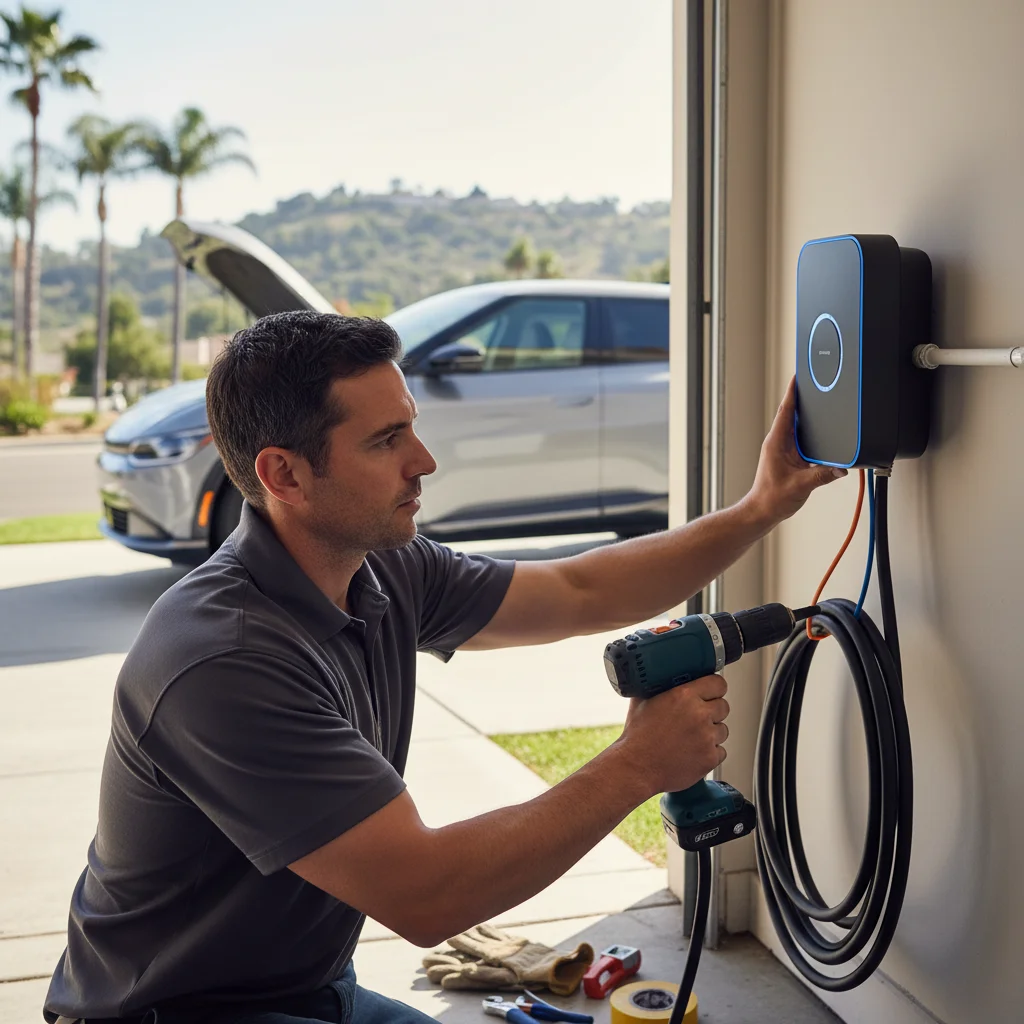
The Solterra’s CCS port can take a field top-off. Operators bring a 240-volt Level 2 source to the car. They use a CCS adapter for non-Tesla EVs. Charging time is typically 15 to 30 minutes. That session typically adds 10 to 20 miles of range. That’s charging time, not a promise of when someone arrives. It’s meant to get you to a DC fast stall or home.
Once you can drive, CCS stalls exist around the county. Electrify America lists a Fashion Island site at 401 Newport Center Dr in Newport Beach. There’s another at Walmart, 440 N Euclid St in Anaheim. South county has the Dana Point Station at 25825 Las Vegas in Capistrano Beach. EVgo lists Plaza Antonio at 22351 Antonio Pkwy in Rancho Santa Margarita. Confirm a stall is working in your charging app before you rely on it.
On-site charging for an empty pack is out-of-charge recovery. It’s a different job from a 12-volt jump.
Why a stall hunt doesn’t fix a dark Solterra
Tesla holds 59 percent of Orange County’s public DC fast ports. Countywide, AFDC shows 223 DC fast stations and 1,452 DC fast ports. Without Tesla, that’s 175 stations and 591 DC fast ports. Orange County’s public port count was 7,095 as of December 31, 2025. That’s 36.8 ZEVs per public port countywide. Statewide the same math comes out to 24.4. Public stalls can be busy on a weekend. A dead 12-volt still needs a jump at the car. Hunting a stall doesn’t wake a dark dash.
What a local operator brings
Charge Pro OC is a referral line for this county. It matches stranded EV drivers with independent local mobile rescue operators. The brand doesn’t perform the work on your car. It owns no trucks and employs no technicians. The operator quotes you before any work starts. They bill you directly for the job.
For a dead 12-volt, the operator jumps the correct posts. The READY light should return after that jump. They can also replace a 12-volt on site if it won’t hold. No price belongs on this page from us. Ask the operator for the quote before they start. If the issue is range, they charge through the CCS port.
The pros we connect you with are licensed. They handle Tesla and every major EV brand, Solterra included. We serve every city in the county. That includes inland north county, the central cities, East County, and the coast.
More on how a non-Tesla EV rescue is dispatched. The county walkthrough is non-Tesla EV rescue in Orange County.
If you’re stranded right now, call (949) 444-0151. Tell the person whether the dash is dark or showing zero miles. That helps an operator bring a jump or a CCS charge. Nobody on this line can promise when a truck arrives. The operator who takes the job sets the plan with you.
Frequently asked questions
Why won’t my Subaru Solterra start if it still has range?
The Solterra needs the 12-volt battery to boot before the traction pack can work. If that small battery is dead, the dash stays dark. Nothing responds, no matter what range you had yesterday. A jump to the right terminals usually brings the READY light back.
Is the Solterra’s 12-volt the same as the Toyota bZ4X?
Yes, it’s the same 12-volt layout. Both sit on Subaru and Toyota’s e-TNGA platform. They’re mechanically the same, including the 12-volt system, its location, and the jump posts. The same jump steps apply to both.
Can I jump start my Solterra myself?
You can, if you follow the posts in the manual. Use the red positive jump post under the hinged cover on the driver’s side. Ground the negative to bare metal, not the battery terminal. Confirm your year before you connect anything. If you’re unsure, skip the clamps for now. Ask for an operator who can do the jump.