Hyundai Ioniq 5 charging time depends on the plug in Orange County. It’s short at a capable DC fast stall. It’s long on a home Level 2 circuit. Hyundai lists about 18 minutes from 10 to 80 percent under ideal conditions. A Long Range pack on Level 2 usually needs 6 to 7 hours. Public DC fast here is thinner per EV than the California average. Real sessions often include a wait.
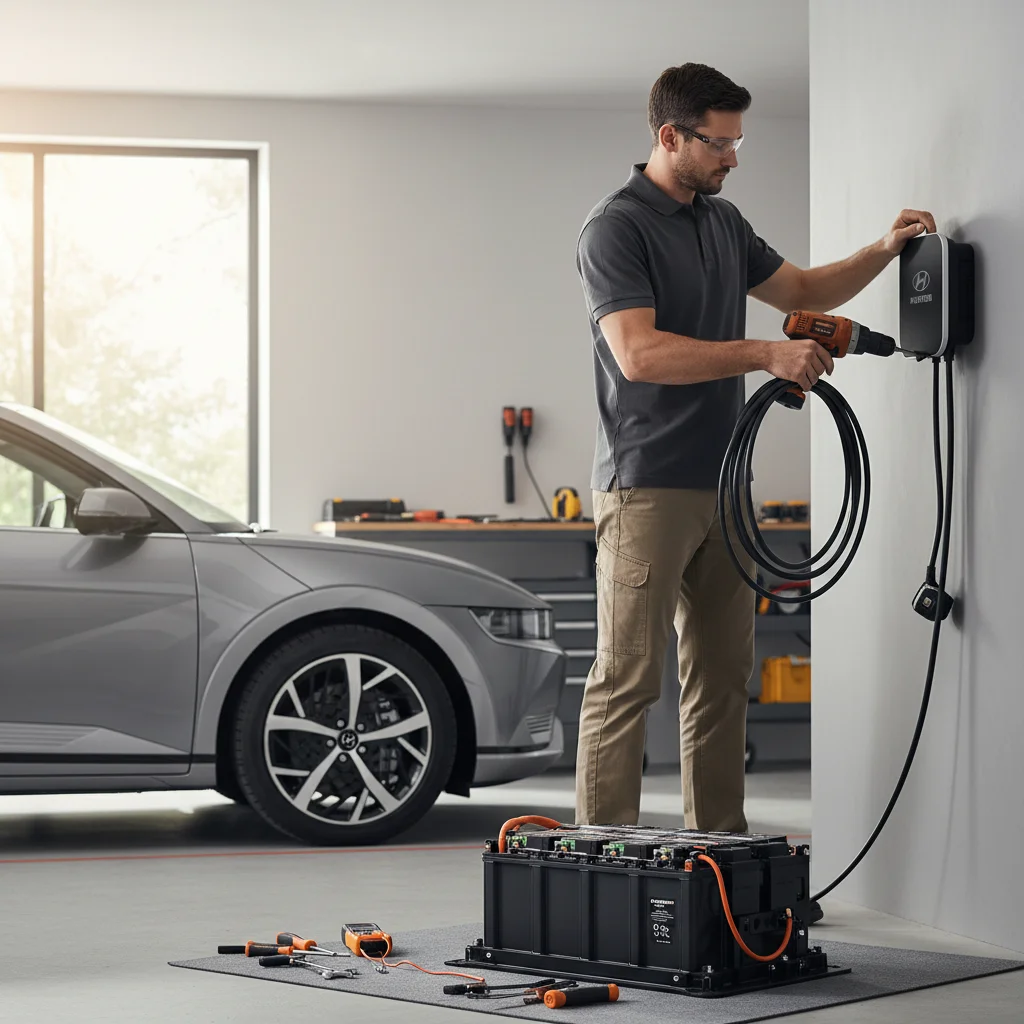
Published minutes versus an Orange County stop
Hyundai’s 18-minute number is a clean 10 to 80 percent pull. It assumes a warm pack and a stall at peak power. Plenty of local stops miss one of those. The car can take a lot of current. The stall in front of you may not offer it.
The Ioniq 5 uses an 800-volt battery architecture. Most mainstream EVs still run 400 volts. Higher voltage lets the pack accept more power at a compatible DC fast stall. It doesn’t speed up a home wall unit. Level 2 output is set by the circuit and the onboard charger. Home time looks ordinary. A healthy DC stop looks unusually short.
The county has more EVs than the port count suggests
Orange County isn’t short on electric cars. As of December 31, 2025, the California Energy Commission counted 210,842 battery-electric vehicles here. Zero-emission vehicles were 10.56 percent of the light-duty fleet. California’s share was 7.54 percent. The county holds 12.02 percent of the state’s battery-electric cars. It’s only 8.33 percent of the state’s light-duty fleet.
Public hardware didn’t match that weight. The Commission counted 7,095 public ports in the county on the same date. Twenty were Level 1. Another 5,600 were Level 2. The rest, 1,475, were DC fast. California had 91,520 public ports. Orange County’s share of that hardware is 7.75 percent. Divide 260,833 zero-emission vehicles by 7,095 public ports. You get 36.8 vehicles per port. The statewide ratio is 24.4. That ratio is why a brochure session stretches in real lots.
Tesla still dominates the fast stalls an Ioniq 5 driver may not use. Tesla is 65.51 percent of the county’s battery-electric fleet. DOE Alternative Fuels Data Center data shows 1,452 public DC fast ports in Orange County. Tesla holds 861 of them, or 59 percent. The other 591 ports sit on 175 non-Tesla stations. ChargePoint has 71 sites and only 76 DC fast ports. Most of those are single-plug dealership and office units. They aren’t a trip backbone.
CCS stalls that actually show up on the map
An Ioniq 5 ships with a CCS charge port. Without a NACS adapter, you’re shopping that smaller non-Tesla slice. Lake Forest is an exception on the Tesla network. The Magic Dock Supercharger at 24372 Rockfield Blvd lists CCS1 and NACS. Confirm your year talks to it before you route there.
Electrify America runs the largest non-Tesla DC cluster in south Orange County. Dana Point Station at 25825 Las Vegas in Capistrano Beach has 12 DC fast ports. The Anaheim Electrify America site at 440 N Euclid St has 10. Fashion Island in Newport Beach has 8 at 401 Newport Center Dr.
EVgo fills inland and coastal lots. Plaza Antonio in Rancho Santa Margarita has 14 DC fast ports at 22351 Antonio Pkwy. Ocean View Plaza in San Clemente has 10 at 638 Camino de los Mares. Ladera Ranch has 8 at 27542 Antonio Pkwy. Seal Beach has 4 at 801 Pacific Coast Hwy.
Central and north county Tesla sites are huge if you have the adapter. Garden Grove’s Harbor Blvd Supercharger has 32 stalls. Tustin’s Franklin Ave site has 36. San Clemente’s Avenida Vista Hermosa site has 49. Check adapter support for your model year first. A CCS car at a NACS-only stall is just a parked car.
Coastal days and inland commutes aren’t the same charge. Huntington Beach after a long beach stop is its own wait. An Irvine office lot at noon is another. A commute on I-5 through Irvine drains differently than the 91 through Anaheim. Santa Ana and Garden Grove mix dense blocks with mall hardware. Yorba Linda grades eat range before you ever plug in.
Overnight Level 2 is still the daily plan
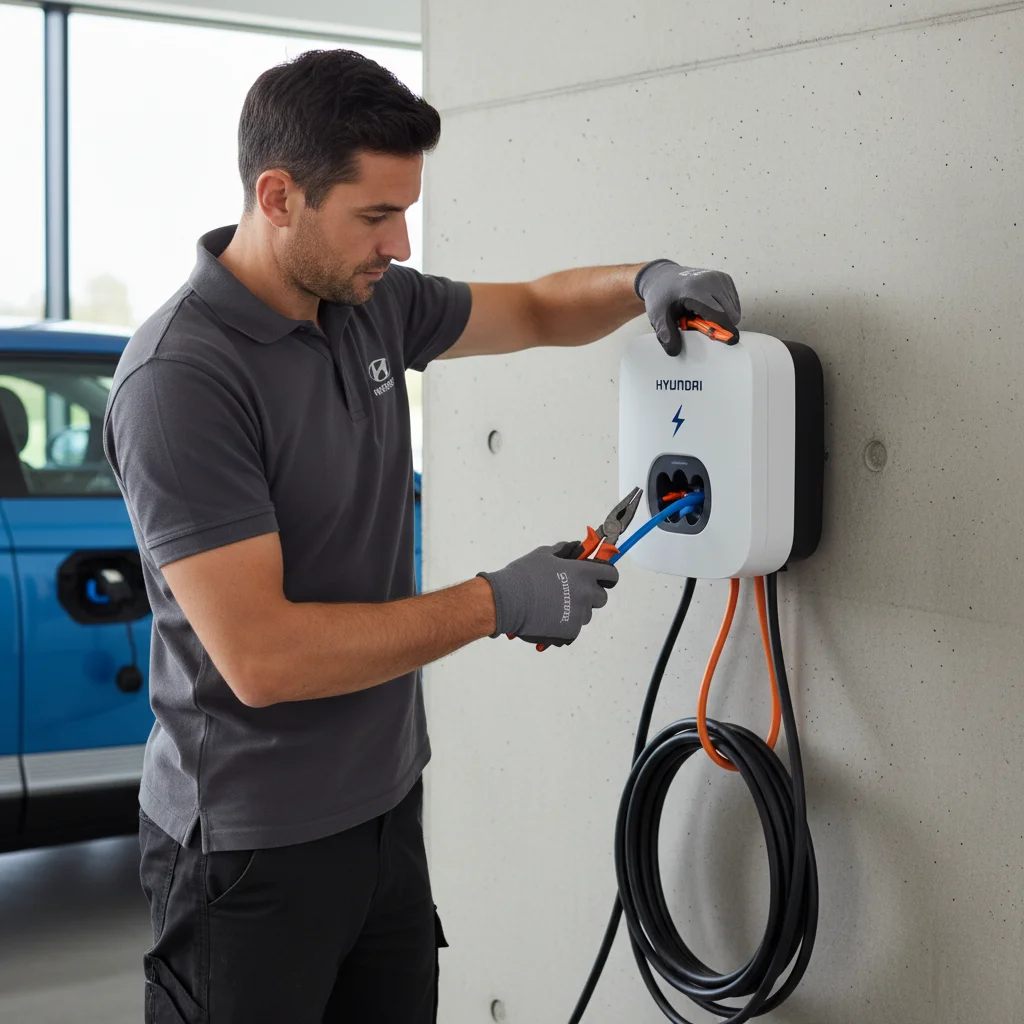
A 120-volt outlet will feed an Ioniq 5. It won’t cover a normal Orange County day. A full charge from empty on Level 1 can run past a full day. Most owners keep that cord as a backup.
Level 2 is how the nights actually get done. You need a dedicated 240-volt circuit and a wall unit. See 240-volt charging at home, or on the shoulder if you’re comparing those two paths. Standard Range packs usually finish in about 5 to 6 hours. Long Range packs usually finish in about 6 to 7 hours. Starting percent and wall-unit output both move the clock. Overnight coverage is enough for most local commutes.
If the house doesn’t have Level 2 yet, that’s an electrician’s project. Confirm panel capacity before you assume the garage can take a new circuit. Charge Pro OC doesn’t install chargers. It’s a referral line for stranded drivers.
Pack size still sets how far a full session takes you. The Ioniq 5 battery size guide covers Standard Range and Long Range for local trips.
What stretches a DC session past 18 minutes
Battery temperature still matters in mild air. A cold pack accepts power more slowly. Inland mornings in Yorba Linda often start cooler than a Newport Beach afternoon. The car will still charge. It just won’t match the brochure.
Busy stalls also under-deliver. A unit that looks strong on the app may share a cabinet. Your session then sits below what the Ioniq 5 could take. Starting a DC stop at 60 percent adds less range than starting at 10 percent. The percentage can still tick up fast. Like most EVs, the Ioniq 5 pulls hardest in the middle of the curve. It tapers hard toward 100 percent. Stopping near 80 percent is usually the time-efficient habit.
Adapters add another variable. CCS-to-NACS hardware exists. Speed through an adapter depends on the stall, the adapter, and the car’s software. Check your year before you bet a trip on it.
If the session isn’t slow, and it isn’t moving, that’s a different fault. A stuck cable is a known Ioniq 5 complaint. Follow the charge port release steps. If the car won’t wake after you unplug, run the 12V checks. Do that before you call a tow.
Empty on the street, not waiting on a six-hour charge
An empty Ioniq 5 on an Orange County shoulder doesn’t need a full home cycle. It needs enough range to reach a working stall. Independent operators we connect you with bring a 240-volt source to the car. They use a CCS or J1772 adapter for non-Tesla EVs. On-site charging time is typically 15 to 30 minutes. That usually adds about 10 to 20 miles of range. That’s charging time, not an arrival window.
Charge Pro OC doesn’t own trucks. It doesn’t employ technicians. The operator quotes you before work starts and bills you directly. If you’re already stuck, mobile EV charging or non-Tesla EV rescue is the path. Irvine apartment lots strand CCS cars when the stall is taken. Anaheim garages do the same when a stall is offline.
Call (949) 444-0151 and we’ll connect you with a local independent operator.
Frequently asked questions
How long does a Hyundai Ioniq 5 take to charge at home?
On Level 2, a Standard Range pack usually needs about 5 to 6 hours. A Long Range pack usually needs about 6 to 7 hours. Starting percent and charger output both change that window.
How fast does an Ioniq 5 charge on a DC fast stall?
Hyundai’s published spec is about 18 minutes from 10 to 80 percent under ideal conditions. The stall has to match the car’s peak rate. Real Orange County sessions often run longer than that. A busy stall or a cold pack will stretch it.
Why does public charging feel tighter here than the spec?
Orange County had 36.8 zero-emission vehicles per public port as of December 31, 2025. California’s average was 24.4. Tesla also holds 59 percent of local DC fast ports. A CCS Ioniq 5 without an adapter is shopping the rest.